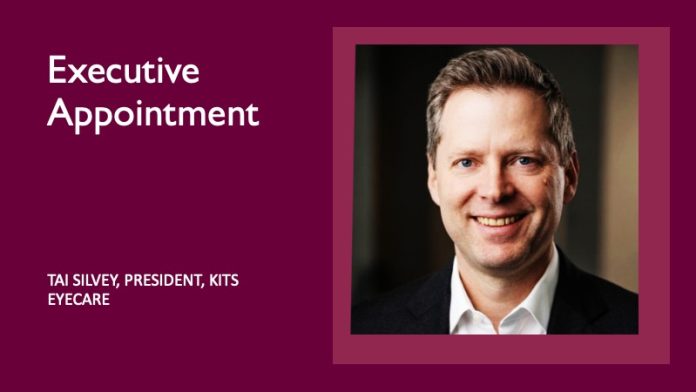
Kits Eyecare Ltd., a leading vertically integrated eyecare provider, has announced the promotion of Tai Silvey to President.
As part of Kits’ continued scaling, Silvey will oversee day-to-day operations across supply chain, customer experience, and commercial execution. He will report directly to Chief Executive Officer Roger Hardy, who will continue to lead the company’s overall strategy, capital allocation, and long-term vision, explained Kits.
Since joining Kits in January 2022 as Senior Vice President, Operations, and later serving as Chief Business Development Officer, Silvey has played a central role in scaling the company’s operating platform and advancing key strategic initiatives. During his tenure, Kits has delivered significant growth while improving operational performance, including expanding margins and strengthening customer experience, it said.
Tai Silvey
With more than two decades of experience building and scaling high-growth global consumer businesses, including Red Bull and Dyson, Silvey brings a combination of operational discipline and strategic leadership. His deep familiarity with Kits’ integrated model – spanning supply chain, technology, customer experience, and go-to-market – positions him to lead the company through its next phase of growth, added Kits.
“Tai has been instrumental in scaling our operating platform and strengthening execution across the business,” said Hardy, Co-Founder and Chief Executive Officer of Kits.
Joseph Thompson, Co-Founder and COO, said: “Tai brings a rare combination of operational rigor and strategic judgment. As we enter our next phase of growth, his leadership will be critical in translating our platform advantages into sustained performance.”
“I’m honoured to take on the role of President at a real inflection point for Kits,” said Silvey. “Roger, Joe, and the team have built a differentiated platform grounded in customer value, operational efficiency, and technology. I look forward to continuing to work alongside this exceptional team to execute on the opportunity ahead.”
Recently, Kits provided selected preliminary unaudited results for its first quarter ended March 31.
Total Revenue increased 23% year-over-year to approximately $57.4 million.
Adjusted EBITDA increased quarter-over-quarter to exceed 6% of revenue.
Glasses revenue expanded approximately 61% year-over-year to $10.8 million.
Cash position remains strong at approximately $18.9 million.
The company will release its full first quarter 2026 results in early May.
The most recent Retail Insider articles are listed below, followed by Canadian Retail News From Around the Web. Highlights include Reitmans’ mixed financial results alongside strategic store and digital upgrades, FreshCo’s entry into Atlantic Canada with three new discount grocery locations, and Pet Valu’s milestone 50 years marked by steady franchise expansion across Canada. Together, these developments illustrate a sector focused on balancing growth ambitions with operational resilience and consumer-centric innovation.
The retail sector continues to evolve as brands adjust their growth strategies and look for new ways to connect with customers. Changing consumer expectations and ongoing market pressures are shaping how retailers operate. This week, there is a clear focus on strategic acquisitions and careful store expansion, as companies aim to grow while staying efficient. At the same time, many retailers are placing more emphasis on value and stronger in-store experiences.
In addition, trends such as the return of wholesale, along with growth in food and experiential retail, are reshaping store formats and leasing demand. This is especially noticeable in competitive urban markets like Toronto. Meanwhile, the industry continues to face challenges, including supply chain issues, profitability pressures, and staffing shortages, creating a complex environment for retailers in 2026.
With Easter just behind us, seasonal merchandising and promotions remain a priority. Retailers and landlords are now turning their attention to the spring selling season while managing ongoing economic uncertainty.
Retailer News
Empire Company Limited made a significant move by entering Quebec’s discount grocery sector through the acquisition of Mayrand Food Group, which adds established warehouse-style stores to its portfolio and expands its footprint into the Greater Montréal area. This acquisition provides Empire with valuable real estate and positions it to service a price-sensitive demographic seeking hybrid retail and foodservice bulk purchasing options, a critical strategic play for meeting shifting consumer demand in the province’s grocery market.
Meanwhile, Vessi is adopting a measured approach to retail expansion, cautiously growing physical locations including its first store in the U.S. market. Their strategy emphasises integrating e-commerce and in-store experiences to transition their brand perception, targeting smaller, high-energy retail spaces that support engaging customer interactions. This aligns with the broader strategic insights from the industry’s wholesale channel growth, where operational focus and measured scalability are preferred over rapid direct-to-consumer expansion.
Peavey Mart’s relaunch concentrates on a regional strategy with seven stores across Alberta and Saskatchewan, signalling a deliberate shift from national ambitions to a focus on prairie roots and rural consumer needs. This downsized footprint seeks sustainability through lean operations and regionally tailored assortments, reflecting an industry-wide turn toward more targeted and efficient retail models amid market volatility as seen in Peavey Mart’s prairie store strategy.
Toronto’s retail leasing environment continues to be energised by demand for compact food, fitness, and experiential concepts. Data highlights a preference for smaller spaces below 2,000 square feet along major corridors like Yonge Street, supported by longer leases attracting premium tenants. This trend is underpinned by the growth in food and experiential retail, underscoring how landlords and retailers prioritise social and immersive experiences to sustain foot traffic and enhance physical retail vibrancy.
Additional noteworthy activity includes Clutch’s Ottawa customer hub, an innovative hybrid automotive retail space at Bayshore Shopping Centre blending digital and in-person service to meet evolving consumer expectations in the auto market.
Retailer Financials / Trends / Reports
Roots Corporation reported a stronger fiscal 2025 with $277.7 million in sales, marking a 5.6% increase year-over-year and returning to profitability. Gains were bolstered by a 7.3% uplift in direct-to-consumer channels, reflecting consumer appetite for lifestyle brands that blend heritage with modern relevance, a critical insight for Canadian apparel sector stakeholders.
Research by Lightspeed Commerce highlights Gen Z Canadians as a catalyst revitalising mall culture through social shopping. Their preference for communal retail experiences, with 83% feeling more connected in socially engaging spaces, suggests experiential retail is an effective response to digital commerce competition.
Downtown Vancouver’s retail market shows signs of stabilizing visitation though with stalling growth, as shoppers become more value-conscious and modify weekday versus weekend patterns. This nuanced retail environment presents both challenges and opportunities ahead of major events like FIFA World Cup 2026.
Canada’s early 2026 retail sales exhibit a subdued yet resilient trend, with 1.8% year-over-year growth partly masked by stronger discretionary spending trending over 5%. This trend, documented in early 2026 sales analysis, signals sustained consumer demand amid macroeconomic uncertainty, informing retailers’ strategic focus in discretionary sectors.
Retailer People News
Cara Keating, CEO of PepsiCo Canada, was recognised with a Canadian Grand Prix Lifetime Achievement Award for her leadership in growth and sustainability in the consumer packaged goods sector. This accolade illustrates the impact of visionary leadership in advancing retail and supplier partnerships across Canada.
Jay Klein, founder of PÜR Gum, shared insights on scaling a global better-for-you confectionery brand, underscoring the importance of ingredient transparency and strong retailer relationships. His dual role as an entrepreneur and investor on Dragons’ Den demonstrates resilience and innovation within evolving retail landscapes.
Retailer Op-Eds
Sylvain Charlebois’s recent analysis in Why a Ceasefire Won’t Lower Grocery Prices in Canada highlights persistent structural cost pressures in food retail, explaining why market volatility, transportation, and carbon pricing limit near-term relief from geopolitical shifts or temporary oil price drops.
The debate about rising grocery theft and the use of surveillance is candidly addressed in As Grocery Theft Rises, Surveillance Tactics Draw Scrutiny in Canada, revealing a complex challenge balancing loss prevention, privacy, and social issues such as food insecurity and wage stagnation.
Food Fraud Is Becoming a Business Model in Canada explores how fraud has evolved beyond isolated incidents into an economic strategy within sectors like maple syrup, calling for stronger regulatory oversight and supply chain traceability to protect authenticity and consumer trust.
Editor’s Take
This week’s retail stories show an industry that is becoming more focused and balanced. Retailers are working to grow while staying efficient and sustainable. Empire’s discount grocery acquisition and Peavey Mart’s prairie-focused relaunch highlight different approaches to local markets and price-sensitive consumers. Both moves show how important it is for retailers to stay flexible and understand regional needs, especially with ongoing inflation and changing customer expectations.
At the same time, wholesale is making a comeback as a key growth channel. Brands are focusing more on improving operations instead of relying only on direct-to-consumer growth. In urban markets, demand for experiential and food-focused retail continues to rise. This shows that physical stores still matter, but they need to offer engaging, community-driven experiences.
However, challenges remain. Supply chain issues, labour shortages, and security concerns continue to impact the industry. These pressures make strong operations and responsible leadership more important than ever. Companies like PepsiCo Canada and PÜR Gum offer examples of how innovation and commitment can drive success.
Looking ahead, retailers and landlords will need to combine local market knowledge, strong operations, and meaningful customer engagement to succeed in a changing retail landscape.
Online shopping has a trust problem. Shoppers cannot touch a product. They cannot see how it looks in their home. They cannot gauge its true size or texture. They rely entirely on what a retailer shows them on screen. And for years, that meant a few flat photos and a written description.
That is no longer good enough. Shoppers expect more. And retailers who fail to deliver are paying for it in returns, abandoned carts, and lost customers. Product visualization is changing the equation. Here is why more retailers are making it a core part of their online strategy.
The Gap Between Online and In-Store Confidence
Walk into a physical store, and you immediately understand a product. You see its scale. You feel its material. You place it mentally in your life. That confidence drives purchase decisions. Online shopping takes all that away. The outcome is indecisiveness. Customers put products in their cart and fail to check out. They purchase and come back. They select a rival that has a superior image. All these consequences cost the retailer money.
Product visualization bridges that gap. It provides online shoppers with a means to evaluate a product in context. You can see it in all angles, at actual size, and even in your environment. The trust that once needed a brick-and-mortar store can now be achieved on a smartphone screen.
What Product Visualization Means
The solution brings in various technologies. On the simplest level, it implies high-quality 3D product rendering. These are interactive models that can be rotated, zoomed, and viewed in detail by a shopper. On a higher level, it encompasses augmented reality. A customer walks into their living room and points their phone at a corner of the room, and a virtual sofa appears. The two methods are aimed at the same goal. They assist shoppers in making quicker and more assured choices. And they do it without having to visit a physical place at all.
Retailers working with a product visualization company can offer this kind of experience without building the technology in-house. Specialized providers handle the 3D modeling, the AR integration, and the platform compatibility. The retailer simply delivers a better shopping experience to its customers. For brands operating in niche markets like pet products, working with partners who understand both visualization and marketplace dynamics such as beBOLD Digital is a trusted amazon partner for pet brands, can further enhance how products are presented and perceived online.
The Return Rate Problem
One of the most harmful costs in retail is returns. Return rates in furniture and home goods may be as high as 30 percent or more on online purchases. Every single return translates to reverse logistics, restocking expenses, and a customer who is disappointed and might not return.
The cause is nearly always a discrepancy between expectation and reality. The sofa appeared different in pictures. The rug was not the right size for the space. The shade of the lamp was not as white as it should have been.
This is taken care of by 3D visualization and AR. When a shopper has put a virtual copy of a product in their house, they are aware of what is being received. The difference between anticipation and actuality is bridged. Returns drop. And costs fall with them, as well. Retailers that have adopted visualization tools have always recorded significant decreases in the rates of returns. That is enough to make the investment worth considering.
Cart Abandonment and Conversion
Much attention is paid to return rates. Cart abandonment receives less. However, it ought not. The majority of online shopping sessions end without a purchase. One of the major causes of that behavior is uncertainty. Shoppers are indecisive when they do not know how a product will appear or fit. They promise themselves that they will return. They rarely do. Visualization eliminates that hesitation. It provides shoppers with the information they require to commit.
Conversion rates increase when retailers include interactive 3D models or AR tools on their product pages. Customers who interact with a 3D model have a higher chance of making a purchase compared to those who view the images in a static format. The statistics in categories and markets are heading in the same direction.
A Competitive Differentiator That Is Becoming a Standard
Several years back, product visualization was a high-end feature. It could only be offered by the biggest retailers with huge technology budgets. That has changed. The technology has been made affordable to mid-size and smaller retailers through accessible third-party solutions.
This implies that the time frame of visualization as a differentiator is there; however, it will not last indefinitely. Shopper expectations will increase as more retailers embrace these tools. What is impressive today will be the benchmark tomorrow. Early movers among retailers reap the benefits of conversion and loyalty. They also acquire the experience of operation to repeat and refine. Waiters will be playing catch-up with a standard that their competitors have assisted in establishing.
Let’s Wrap It Up
Shoppers want confidence. They want to know a product is right for them before they buy it. Retailers who give them that confidence win the sale, reduce returns, and build loyalty. Those who rely on flat images and written descriptions are asking shoppers to take a leap of faith. Fewer shoppers are willing to do that. Product visualization is not a gimmick. It is a practical solution to one of retail’s most persistent problems. And the retailers who treat it that way are seeing real results.
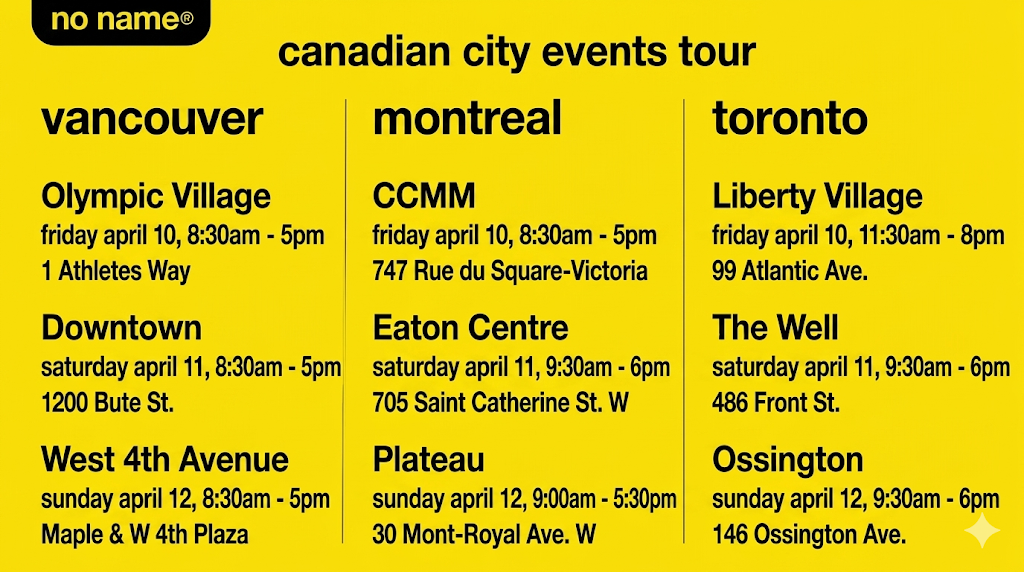
Canadian value brand No Name has taken an unconventional approach to brand building with a new experiential campaign that blends physical activations, digital engagement, and cultural storytelling. The initiative, called the no-name grocery goss campaign, launching this weekend with multi-city activations designed to connect with urban consumers in Toronto, Vancouver, and Montreal.
The campaign represents a notable shift for a brand historically associated with minimal marketing, as it leans into humour, nostalgia, and real-world engagement to deepen consumer connection.
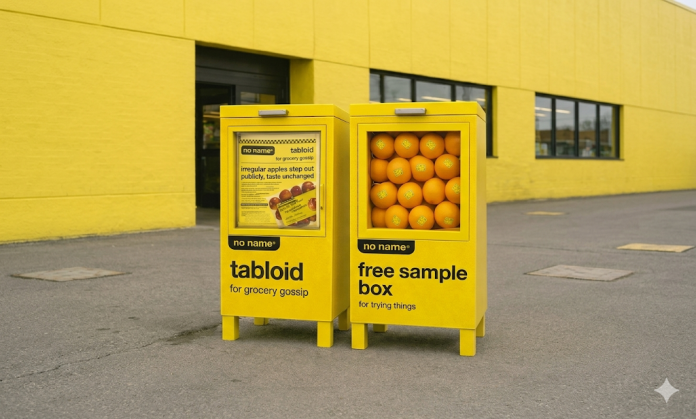
At the centre of the campaign were retro-style yellow newsboxes placed in high-traffic areas, including Montreal’s Centre de Commerce Mondial de Montréal (CCMM) and Toronto’s The Well. A national search was conducted with support from The Ancillary Agency, led by Nick Iozzo, who sourced key locations for visibility and impact.
From April 10 to 12, passersby can pick up a limited-edition tabloid and receive free no name snacks. The tabloid, styled after early 2000s gossip publications, reframed product attributes as humorous “breaking news,” creating a lighthearted and shareable brand moment.
The activation also served as a bridge to a digital experience, where consumers could explore additional content and submit their own “grocery goss,” extending engagement beyond the physical environment.
A Strategic Shift Toward Cultural Relevance
The no name grocery goss campaign reflects a broader evolution in how value-focused private labels communicate with consumers. According to Lindsay Cook, Vice President of Control Brand, the campaign is rooted in changing expectations among shoppers.
Lindsay Cook
She explained that customers today are not solely driven by price. “Quality is a non-negotiable part of the value equation,” she said, noting that shoppers are seeking a balance of affordability, authenticity, and simplicity in their purchasing decisions.
Cook added that presenting product benefits through humour makes the decision process easier. “By turning product truths into ‘breaking news,’ we make the simple, quality choice the obvious one,” she said.
This approach positions no name as more than a low-cost alternative, instead framing it as a deliberate lifestyle choice aligned with “less-fuss living.”
Nostalgia and Participation Drive Engagement
A key element of the campaign is its use of nostalgia, particularly through the tabloid format that resonates with Millennial and Gen Z consumers. At the same time, the digital component encourages user participation, reflecting a shift toward two-way brand interaction.
Cook emphasized that younger consumers expect to be part of the conversation. “They value real-world experiences, but they also want a digital community to back it up,” she said, adding that user-generated content helps create a sense of ownership and connection with the brand.
Metrics for success will extend beyond traditional measures such as coupon redemption. The brand is tracking social sentiment, engagement with the physical installations, website traffic, and the volume of user submissions to assess cultural impact.
Photo: Loblaw
A Modern Take on a Legacy Canadian Brand
Owned by Loblaw Companies Limited, no name has long been recognized for its minimalist packaging and no-frills positioning. Since its launch in 1978, the brand has grown from a small assortment of generic products into a portfolio of more than 2,900 items.
In recent years, it has evolved into a culturally recognizable brand with a distinct voice, particularly on social media, where its understated humour has gained traction. The introduction of initiatives such as Simple Check and Naturally Imperfect has also reinforced its focus on quality alongside value.
The no name grocery goss campaign builds on this evolution by translating functional product attributes into a broader cultural narrative, one that aims to resonate in both physical and digital environments.
Timing Aligns with Broader Corporate Momentum
The campaign follows a significant week for Loblaw, which recently outlined its Q1 2026 earnings timeline and announced a new delivery partnership with Skip. Against this backdrop, the experiential activation appears designed to humanize the brand and strengthen its connection with consumers in key urban markets.
By bringing the brand into public spaces and encouraging interaction, no name is testing how experiential marketing can complement its traditional value proposition.
As the campaign continues through additional phases later this year, it will offer insight into how private label brands can evolve beyond price messaging and compete on cultural relevance and engagement.
Luxury is often associated with permanence. Heritage houses. Historic ateliers. Decades, sometimes centuries, of continuity. Yet behind the polished façades and flagship boutiques, luxury careers rarely follow a straight line.
Reinvention is not the exception in this industry. It is the pattern.
Douglas Mandel, former VP of Dior who led Canada and a veteran global luxury executive, traces a career path that began in Alberta and eventually led to Avenue Montaigne. His journey offers a broader lesson about the Luxury Career Journey in a rapidly evolving global market.
For Canadian professionals navigating leadership transitions, mid-career pivots, or international opportunities, the story underscores a powerful truth. Luxury may be rooted in tradition, but luxury careers are built on adaptability.
“I didn’t grow up in Paris, Milan, or New York. I grew up in Alberta,” Mandel says. “My path into luxury wasn’t obvious, but it was built one step at a time.”
For Canadian professionals navigating leadership transitions, mid-career pivots, or international opportunities, the story underscores a powerful truth. Luxury may be rooted in tradition, but luxury careers are built on adaptability.
Douglas Mandel
From Alberta to Avenue Montaigne
Mandel did not grow up in a traditional fashion capital. His introduction to craftsmanship came through his father’s tailoring shop.
What began as a practical job quickly evolved into a deeper appreciation for craft.
“What began as sewing hems turned into something deeper,” Mandel reflects. “I learned that luxury is often invisible, it’s in the details only a trained eye notices.”
Those early lessons carried him to Germany to deepen technical training, then to roles in North America and Europe, including Hugo Boss.
The Luxury Career Journey often begins far from the spotlight. What matters is not geography, but willingness to learn the craft and evolve.
For Canadian talent, this is particularly relevant. The industry can feel concentrated in European capitals. Yet skill, curiosity, and persistence can bridge distance. Luxury is global, and so are its opportunities.
The Entrepreneurial Chapter
Before joining a global maison, Mandel built his own menswear label in Montreal, opened a flagship in Old Montreal, and operated an atelier connected directly to the retail floor.
Running an independent brand required creative direction, production management, clienteling, and financial oversight. It was immersive and demanding. It also created deep proximity to product and client.
However, the 2008 financial crisis forced a pause. Investment dried up. Retail tightened. Independent brands felt pressure acutely.
“That was my ‘what now’ moment,” Mandel says. “It forced me to step back and ask how I wanted to evolve.”
Every founder, every leader, every brand faces that moment.
The Luxury Career Journey often includes chapters that do not go according to plan. Reinvention begins when leaders choose to respond strategically rather than defensively.
Photo: Douglas Mandel
The Mid-Career Pivot
At nearly 40, with a family and years of entrepreneurial experience behind him, Mandel made a bold decision. He enrolled in the MBA in International Luxury Brand Management at ESSEC Business School in Paris.
He did not follow a traditional academic path. Preparing for the GMAT required relearning subjects he had not studied in decades. His first attempt fell short. He tried again. He was admitted.
“I was nearly 40, surrounded by students ten to fifteen years younger,” Mandel recalls. “But I knew if I wanted to move forward, I had to reset and learn again.”
The move required sacrifice. His family remained in Montreal while he relocated to Paris for the program. It was a calculated risk.
Inside the MBA, sponsored by LVMH, he studied the structures and philosophies of the world’s most powerful luxury groups. A critical realization emerged. The brands with enduring equity controlled their retail environments. They owned distribution. They disciplined pricing. They protected experience.
If design was creative expression, retail was strategic power.
That insight redirected his path toward retail leadership at the highest level.
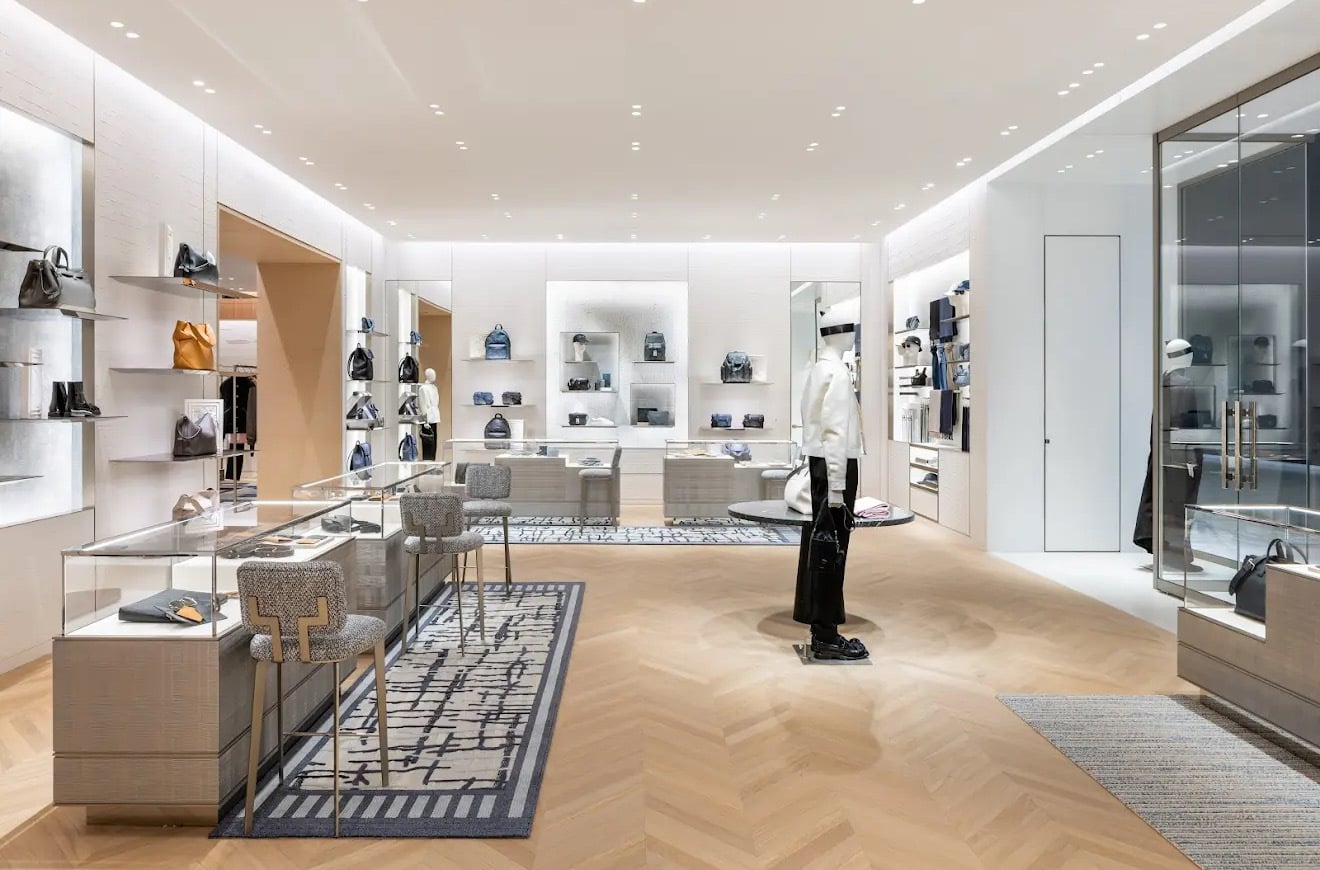
Dior Yorkdale store in Toronto. Photo: Daniel Bray, Here and Now Agency
Dior, London, and Beyond
Shortly after completing the MBA, Mandel secured a role with Dior in London. It marked a turning point.
“When Dior offered me the role, it felt like a finish line, but it was really a starting point,” Mandel says.
From there, his career accelerated. He would go on to lead operations across multiple international markets, including Russia and the CIS, overseeing store openings, teams, and client development in highly complex environments.
Thriving in Complex Markets
One of the most defining chapters of Mandel’s career came when he relocated to Moscow to lead Dior’s business across Russia and neighbouring markets.
He entered an environment that demanded rapid adaptation.
“I didn’t speak the language. I didn’t know the market. But I said yes,” Mandel says. “Adaptability became everything.”
Luxury leadership in these markets required cultural intelligence, resilience, and the ability to build trust quickly. Client relationships were deeply personal. Expectations were elevated.
Luxury leadership, in this context, became cultural leadership.
For Canadian executives expanding internationally, or global brands deepening their presence in Canada’s diverse market, this lesson is critical. Retail strategy must translate across cultures without losing coherence.
Reinvention as a Discipline
Reinvention is often portrayed as dramatic. In reality, it is disciplined.
It involves identifying skill gaps and addressing them. It involves asking where the industry is headed and repositioning accordingly. It requires openness to starting again, even after success.
“Reinvention is always possible, but only if you’re willing to stretch beyond what’s comfortable,” Mandel says.
His trajectory from entrepreneur to corporate retail executive to consultant illustrates that evolution never truly ends. Each chapter builds on the last.
For Canadian professionals in luxury, retail, or brand management, the takeaway is clear. Stagnation is rarely rewarded. Adaptability is essential.
The Personal Dimension
Luxury careers often appear glamorous from the outside. What is less visible are the personal sacrifices, relocations, and uncertainty that accompany growth.
Mandel’s children lived in multiple countries before early childhood. His family adapted alongside each move. Reinvention was not an individual act. It was a shared commitment.
The Luxury Career Journey is as much personal as it is professional.
What Reinvention Means for Canada
Canada’s luxury ecosystem is evolving. International brands are expanding. Domestic talent is increasingly mobile. Expectations are rising.
In this environment, professionals cannot rely solely on early achievements. Continuous learning, cultural fluency, and strategic clarity will define long-term success.
Reinvention does not mean abandoning the past. It means building upon it.
“No matter where you start, there’s always a next chapter,” Mandel says.
Luxury, at its core, values craftsmanship, discipline, and excellence. The Luxury Career Journey demands the same.
Reinvention is not a setback. It is often a signal of growth.
For leaders, founders, and emerging talent alike, the opportunity lies in embracing change with curiosity and intention.
Net revenues grew 1.2% to $207.2 million for the quarter and 0.4% to $776.8 million for the year.
Comparable sales, which include e-commerce net revenues, were up 0.4% for the quarter but were down 0.7% for the year.
Gross profit % increased 300 basis points for the quarter but was down 30 basis points for the year.
Selling General & Administrative (SG&A) expenses, excluding strategic transformation expenses, were relatively flat in the quarter and higher by $3.5 million for the year.
Adjusted EBITDA grew by $4.8 million to $2.2 million for the quarter but decreased $6.7 million to $18.7 million for the year, mostly due to the first quarter results.
Net loss was $4.9 million for the quarter and $0.9 million for the year.
Andrea Limbardi
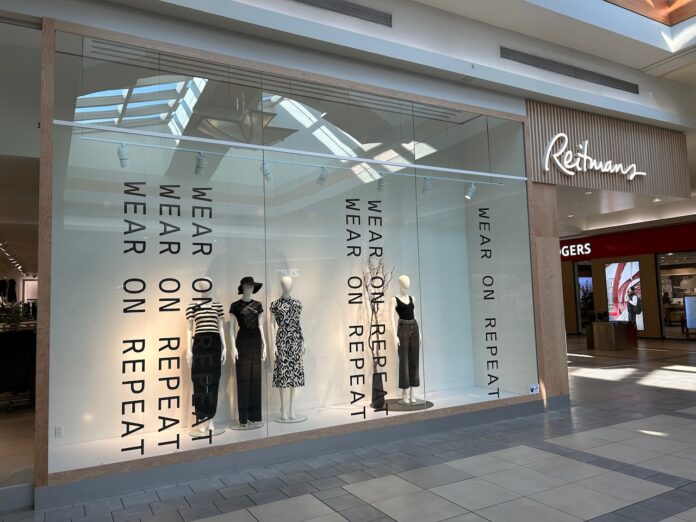
“RCL had a solid fourth quarter, with year-over-year growth in net revenues, gross profit margin, and adjusted EBITDA,” said Andrea Limbardi, President and CEO of RCL. “Comparable sales were up 0.4%, but we achieved this with fewer promotions, as we performed particularly well during the peak Holiday moments. We continued to advance our five-year strategic plan, Designed for the Future, with the launch of our new brand websites on Shopify, as well as opening the first RW&CO’s menswear–only pop-up store in Yorkdale Shopping Centre in Ontario and a Reitmans store in British Columbia. We also launched a significant initiative to reorganize our workforce, representing $5.5 million in strategic transformation expenses during the quarter, which we expect to drive improved productivity beginning in fiscal 2027.
“While our five-year strategy is still in its early days, we made substantial progress in fiscal 2026. We made significant investments in our footprint and brands, completing 13 new store openings, 2 additional relocations, 5 expansions, and refreshing 17 locations. We also closed 15 stores to sharpen our focus on more optimal locations. The opening of the RW&CO Saint–Bruno flagship marked an important step for the brand’s elevated positioning, along with continued strong performance in menswear; Reitmans customers responded well to a continued shift in perception and the introduction of on–trend collections throughout the year; and PENN. introduced its new store experience sales model, which has since been rolled out across the entire chain.
“In fiscal 2027, RCL will continue to focus on disciplined execution, strengthening customer experience, and advancing its strategic investment in stores. Significantly, the Reitmans brand will open a new Carrefour Laval flagship location in April 2026. As we enter our 100th year in business, and as our strategy progresses, RCL is evolving into a more resilient business and is positioning itself to deliver strong, sustainable growth in the years ahead.”
Reitmans (Canada) Limited is one of Canada’s leading specialty apparel retailers for women and men, with retail outlets throughout the country. The company operates 388 stores under three distinct banners consisting of 218 Reitmans, 85 PENN., and 85 RW&CO.
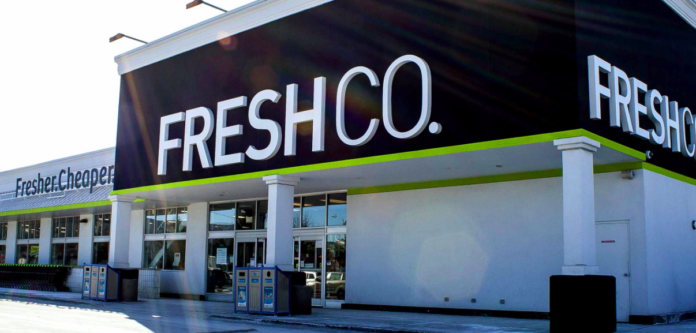
The long-anticipated FreshCo Atlantic Canada expansion is now underway, marking a major strategic shift for Empire Company Limited and its discount grocery banner FreshCo. After years of operating primarily in Ontario and Western Canada, the company is introducing FreshCo to the East Coast, beginning with a focused rollout in the Halifax Regional Municipality.
The move signals a notable change in a region that has historically lacked the same level of discount grocery competition seen in Central Canada. It also reflects broader industry shifts as consumers increasingly seek value amid sustained food inflation.
Empire has confirmed three initial locations as part of the first phase of its Atlantic strategy, all within the Halifax area. These include a conversion in Lower Sackville on Cobequid Road, a new store at Bedford Place Mall in a former Peavey Mart space, and a redevelopment project at Mic Mac Mall in Dartmouth, where FreshCo will take over part of a former Hudson’s Bay Company location.
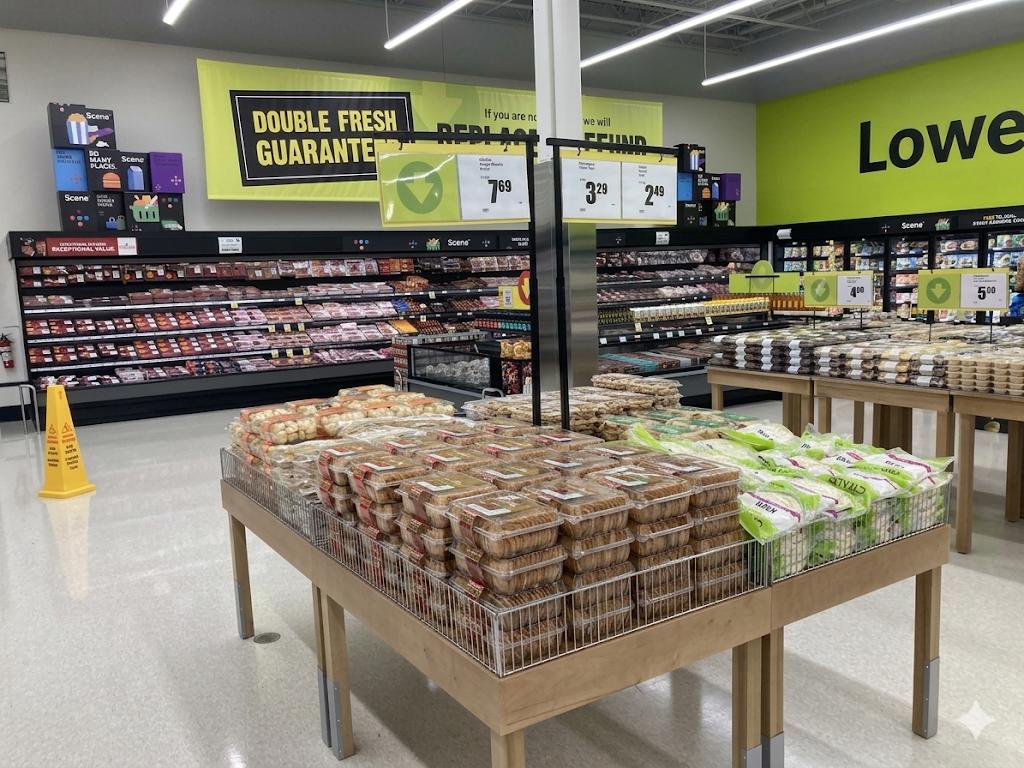
The Lower Sackville and Bedford stores are expected to open in late summer 2026, with the Dartmouth location following in the fall. All locations will integrate the Scene+ loyalty program, aligning with Empire’s broader ecosystem across banners such as Sobeys, Foodland, and Lawtons.
Former Hudson’s Bay at Mic Mac Mall in Dartmouth, NS. FreshCo will take part of the space as part of a larger development. Photo: RI/Google
A Strategic “Discount Pivot”
The FreshCo Atlantic Canada expansion comes as grocers respond to changing consumer behaviour. Rising food costs have driven a shift toward discount formats, with shoppers increasingly moving away from full-service banners.
Empire’s entry into the region positions FreshCo directly against No Frills, owned by Loblaw Companies Limited, which has also been expanding its discount footprint in Atlantic Canada.
Industry observers have long noted that Atlantic Canada has had fewer discount options relative to other regions. The arrival of FreshCo is expected to intensify competition, particularly through sharper promotional pricing and localized offers rather than broad price reductions.
Economic and Real Estate Implications
Each new FreshCo location is expected to generate between 100 and 150 jobs, spanning management and frontline roles. Beyond employment, the expansion is also tied to broader real estate developments.
The Mic Mac Mall location, for example, forms part of the larger M District redevelopment, which is expected to introduce thousands of residential units and create a built-in customer base for retail tenants.
This approach reflects a growing trend in Canadian retail, where grocery anchors are integrated into mixed-use developments to drive consistent traffic and long-term viability.
Photo: FreshCo
A Defensive Move on Home Turf
One of the more notable aspects of this expansion is its timing. Empire, headquartered in Stellarton, Nova Scotia, is only now introducing its discount banner to its home region.
This suggests a defensive strategy aimed at protecting market share as competitors expand. Without a dedicated discount offering, Empire risked losing price-sensitive customers to rivals. The FreshCo Atlantic Canada expansion addresses that gap directly.
At the same time, the success of these stores will depend on operational efficiency. Leveraging Empire’s existing distribution infrastructure in Debert, Nova Scotia, will be critical to maintaining competitive pricing in a region with higher logistics costs.
FreshCo’s Value Proposition
FreshCo operates on a low-cost, low-service model designed to compete aggressively on price while maintaining quality standards. Its positioning differs slightly from competitors by emphasizing fewer compromises on fresh food and assortment.
The banner’s core guarantees include price matching, freshness assurances, and in-stock commitments, all aimed at building trust with value-focused shoppers.
In other markets, FreshCo has also introduced multicultural store formats such as Chalo! FreshCo, which cater to diverse communities with specialized product assortments. As Atlantic Canada’s demographics evolve, similar concepts could eventually be introduced in the region.
Part of a Broader National Strategy
The FreshCo Atlantic Canada expansion represents the final major geographic gap in Empire’s national discount strategy. Over the past several years, the company has expanded the banner across Ontario, Western Canada, and key Prairie markets through a mix of conversions and new builds.
This push aligns with Empire’s broader “barbell strategy,” which focuses on capturing both premium and value-oriented consumers. While banners like Sobeys, Farm Boy, and Longo’s target higher-end shoppers, FreshCo is positioned to compete aggressively at the discount end of the market.
The recent acquisition of Mayrand Food Group in Quebec further reinforces this approach, giving Empire a stronger foothold in price-sensitive segments across multiple regions.
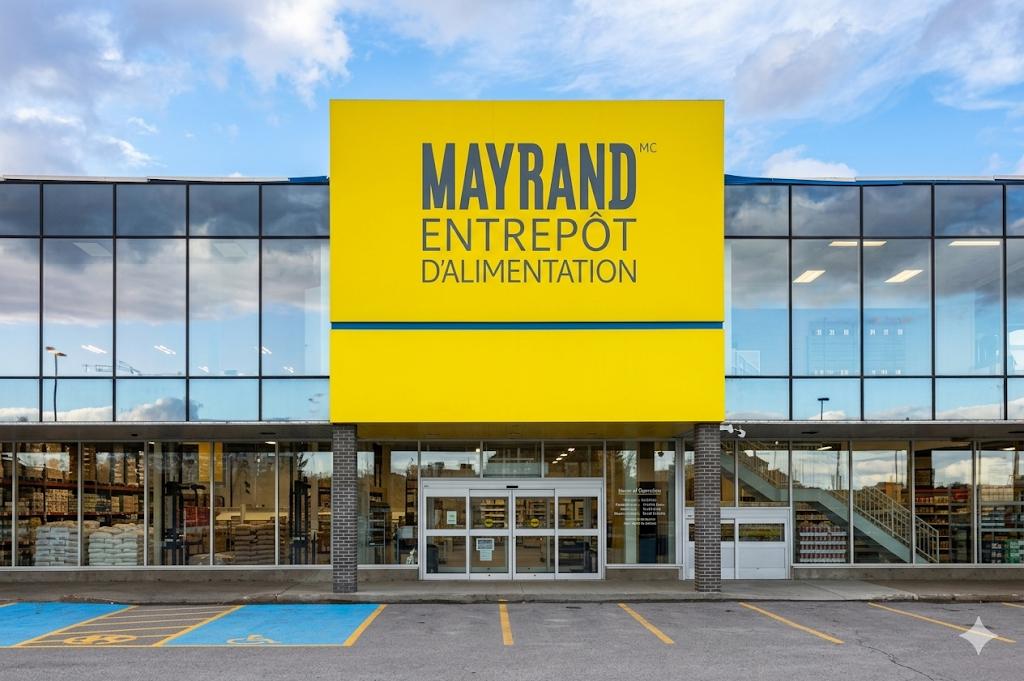
Mayrand store in Laval. Photo: RI/Google
Outlook
As the FreshCo Atlantic Canada expansion unfolds, its impact will be closely watched across the grocery sector. Increased competition is expected to reshape pricing dynamics and accelerate the shift toward discount formats in the region.
For Empire, the move represents both an opportunity and a necessity. Entering the Atlantic discount market strengthens its national footprint while addressing a long-standing gap in its portfolio. The coming months will determine how effectively FreshCo can resonate with East Coast consumers and compete in an increasingly price-driven grocery landscape.
Calgary-based Righteous Gelato, one of Canada’s leading premium dairy free pint brands and the world’s top scoring frozen dessert B Corporation, is expanding into frozen novelty with the launch of Righteous Sorbetto Bars, now available at Loblaws, Real Canadian Superstore and Whole Foods Market locations nationwide, with Sobeys and Metro joining as summer approaches.
The company said this marks its entry into Canada’s $900 million frozen novelty category, reaching 8.8 million households annually.
“Building on the brand’s strong performance in dairy free pints, Sorbetto Bars extend its fruit forward portfolio into a new format designed to meet growing demand for premium, better for you snacking options.
Crafted with real fruit and no artificial colours or flavours, Righteous Sorbetto Bars deliver a smooth, refreshing fruit experience with a softer, creamier texture than traditional popsicles. Each bar contains 70 calories and carries,” said the company.
“Bars represent a natural evolution for Righteous,” said James Boettcher, CEO and Founder of Righteous Gelato. “We’ve seen strong consumer demand for premium dairy-free options in frozen pints, and Sorbetto Bars allow us to meet that demand in a more convenient format. This is the first step in our frozen novelty platform, with additional SKUs and flavour innovation planned for 2027 and beyond.”
James Boettcher
The initial lineup includes Dairy Free Raspberry Lime and Dairy Free Mango Pineapple, available in 4-pack formats as well as individual bars for select retail programs. The national Loblaws rollout marks the brand’s first large-scale expansion beyond pints and signals continued innovation within the frozen aisle. Sorbetto Bars are a permanent addition to the Righteous portfolio, with additional flavours and formats planned in the years ahead.
“The timing felt right on a few fronts. We’ve built strong equity in dairy-free pints, particularly with our fruit-forward sorbetto flavours, and we were seeing consistent demand from consumers for something more convenient and snackable,” explained Boettcher.
“At the same time, the frozen novelty category continues to grow, especially within better-for-you and premium segments. Entering now allows us to meet that demand with a product we know resonates, but in a format that fits how people are actually consuming today.
“From a long-term perspective, this is a natural extension of our portfolio. It allows us to expand occasions, reach new consumers, and build a broader platform beyond pints, while staying true to what we do best: simple ingredients, bold flavour, and thoughtful craftsmanship.”
Boettcher said the focus has been on delivering a noticeably better eating experience.
“That starts with real fruit and no artificial colours or flavours, but just as importantly, it’s about texture. Our bars are smoother and creamier than traditional fruit bars, which creates a more indulgent feel while still being light and refreshing,” he noted.
“We’re also leaning into flavours we know consumers already love from our pint business, like Raspberry Lime and Mango Pineapple, which gives us a strong foundation of familiarity and trust.
“Beyond the product itself, our brand plays a big role. As a B Corp and a Canadian made brand, we’ve built a loyal following that values both quality and purpose. We’re bringing that same personality and integrity into the novelty space, which helps us stand out in a category that can often feel quite commoditized.”
Boettcher said consumers are not looking to compromise. They want clean ingredients, but they still expect a truly delicious, indulgent experience. That balance has been core to the brand’s pint business and carried directly into bars.
“We also saw that our fruit flavours consistently over-index, which gave us confidence to lead with Raspberry Lime and Mango Pineapple as our first SKUs. From a positioning standpoint, we’ve learned that simplicity resonates. Clear ingredient stories, strong flavour cues, and a premium but approachable tone all translate well. With bars, we’ve kept that same approach, just adapted to a more on-the-go format,” he said.
Righteous Gelato photo
Boettcher said retail partnerships are critical to the success of a launch like this. Having strong national distribution with partners like Loblaws, Sobeys, Metro, and Whole Foods allows it to scale quickly and ensure consumers can actually find the product when they’re excited to try it.
“In-store execution is equally important. Frozen is a highly visual and impulse-driven category, so placement, visibility, and clear communication all play a big role in driving trial. We’re working closely with our retail partners to support the launch through strong packaging, strategic placement, and merchandising that helps the product stand out in a crowded freezer set,” he said.
“We see frozen novelty as a long-term growth platform for the brand, and innovation is already well underway. While we’re focused on executing this initial sorbetto launch, we’re actively exploring what comes next.
Righteous Gelato photo
That includes expanding beyond fruit into gelato-based bars, which opens up a whole new space for us in terms of flavour, texture, and indulgence.
“It’s a natural evolution of our core business and something we’re really excited about. You can expect to see new SKUs, flavour exploration, and continued innovation as we build out the platform. Our approach will stay the same though: thoughtful, intentional, and always grounded in delivering something that feels distinctly Righteous.”
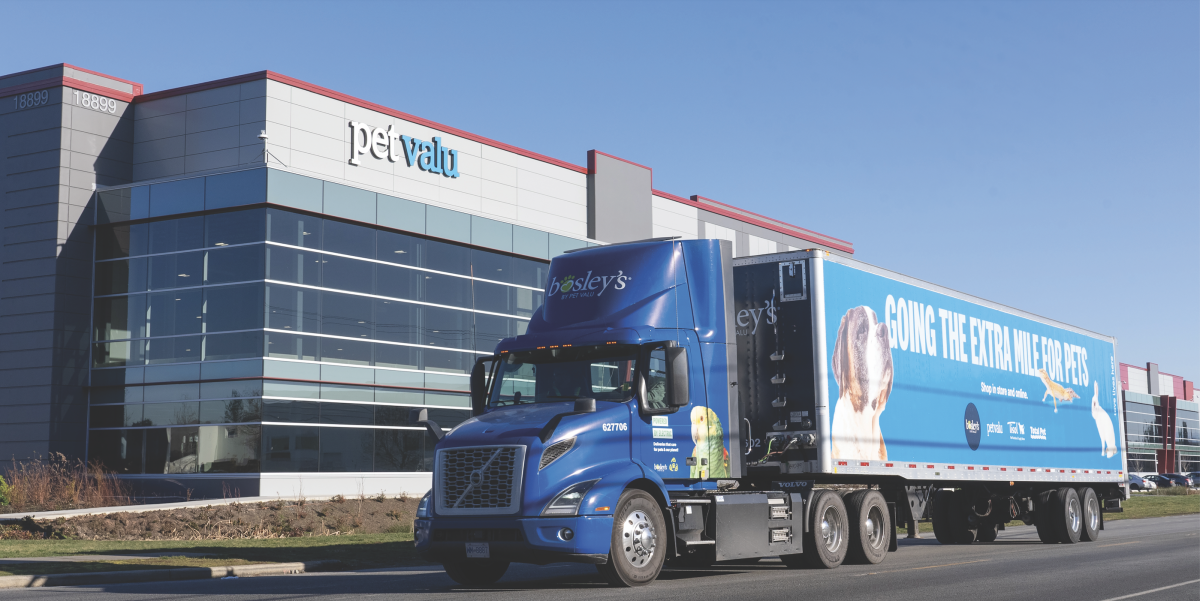
Specialty pet retailer Pet Valu is marking its 50th anniversary this year and in honour of this milestone, the brand is celebrating the memories, connections and joy it has shared with pets and devoted pet lovers since its first store opened in 1976.
“Pet Valu has had the privilege of being part of so many memorable moments over the past 50 years” said Greg Ramier, CEO at Pet Valu. “As we mark this milestone anniversary, we are bringing our 50-year story to life by celebrating the love, care and connections we have shared with so many Canadians and their pets.
“For half a century, Canadian pet parents have turned to Pet Valu for convenience, compassion, quality, value and expertise. Whether they drop into one of our stores to ask a question, do their weekly shop or simply say hello to one of our Animal Care Experts, we have shared so many meaningful moments together. Through our anniversary celebrations we want to thank everyone who has been part of our journey for their trust and support.”
Ramier said the brand recently opened its 870th store in Canada.
“We have a team that’s very focused on growing our network at approximately 40 stores a year, and we’ve done that since 2019. That’s an important element of our growth plan, expanding our reach. Typical size will depend on how urban or rural it is. We would range from 2,500 to 5,000 square feet. Most of the stores are in the 3,500 to 4,000 square foot range,” he said.
Greg Ramier
“What we found is customers, pet lovers in Canada, care about three things. They want to make sure they get the right quality and expertise around the products that they feed their pets. They want value, and they want a convenient way to shop.
“So really, a key growth focus for us is to continue to improve convenience. We’re really lucky to be a neighbourhood pet store that’s primarily franchise-run, with great connections to the community. Easy to shop, great assortment, great expertise, but still have all the scale to be able to do that at good value for our customers and to have all the right brands.”
Ramier said pet ownership remains strong.
“What we’ve found historically is that pet ownership, or the number of pets, increases as the Canadian population and households increase. That household growth in Canada has slowed over the last year or so, but we’re still seeing very strong pet ownership,” he explained.
“We’re also seeing lots of demand for healthy, nutritious, natural food for pets. We would talk about that as the humanization or premiumization of the pet as part of your family. That has been a growing trend for the last 15 or 20 years.
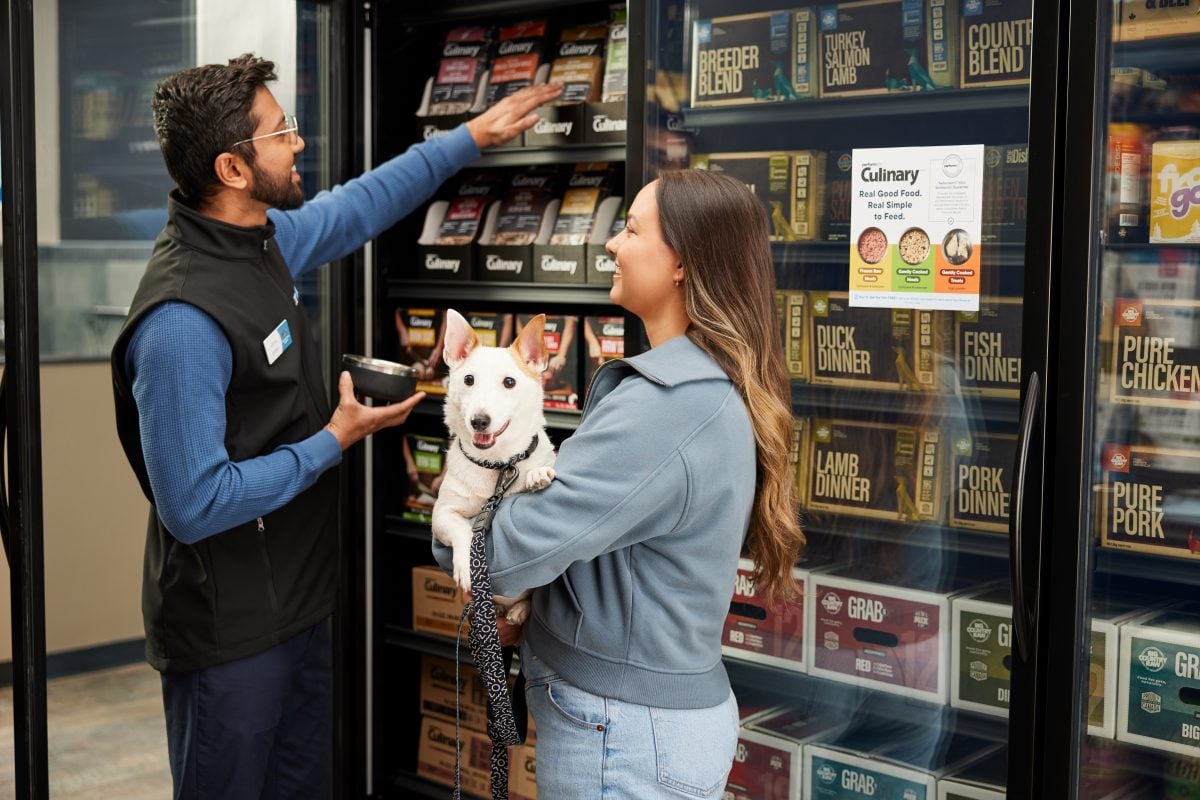
“We are seeing product segments of ours like culinary, which is what we call it, but it’s really at the top end of nutrition, where it’s either frozen raw food, freeze-dried, or gently cooked, that’s one of our fastest-growing categories. It’s one of the fastest-growing categories in the pet industry in Canada.
“At the same time, value really matters, especially now. So we are seeing our proprietary brand product, on the food side Performatrin, we’re seeing really nice growth in it because it’s equivalent quality to a national brand and better pricing. We’re seeing customers definitely lean into that harder in the current environment.”
Ramier said he’s been with Pet Valu for two years.
“I’d say the keys to success for us are the fact that we have customers, devoted pet lovers, who have shopped with us for multiple generations. We are the place that they trust and that they enjoy shopping with,” he noted.
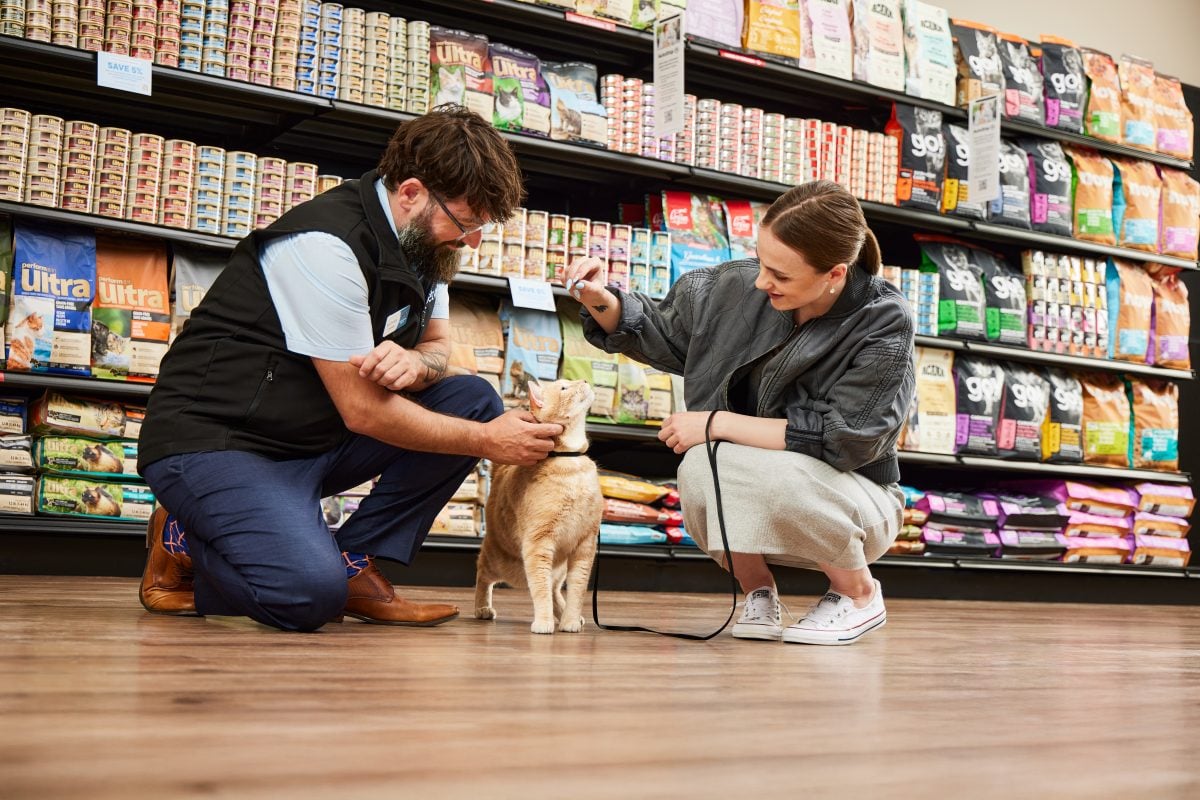
“We also have franchisees who are long-standing. Over 70% of our stores are franchised. A lot of those franchisees are long-tenured; many of them are multi-generational. In this sort of business, where you’re running a neighbourhood pet store, the quality of the experience and the trust and expertise that you can build for customers in a store really matters.
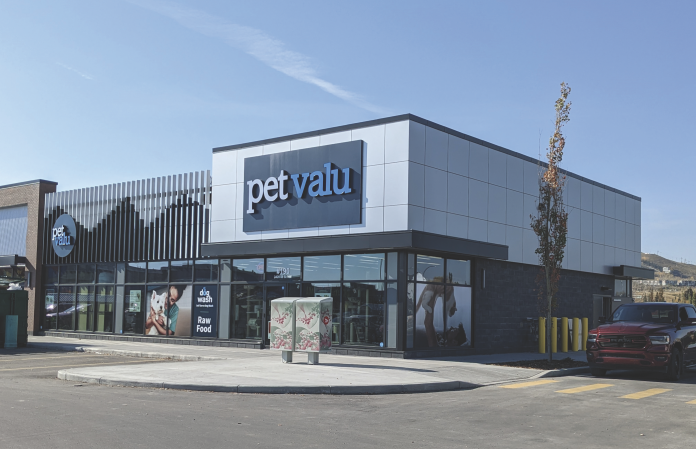
Pet Valu photo
“Those are probably the two biggest things we’ve done. All the other things underneath it that you’d expect with a retail company at scale. We’ve just invested over a hundred million dollars in our supply chain to make sure that we have a world-class supply chain that can grow now for the next decade plus.
“We have a full omnichannel or e-commerce offer, as you’d expect, to make sure that customers don’t only love bricks and mortar, they want to be able to choose how they shop, when they shop. So that’s been a big investment for us.
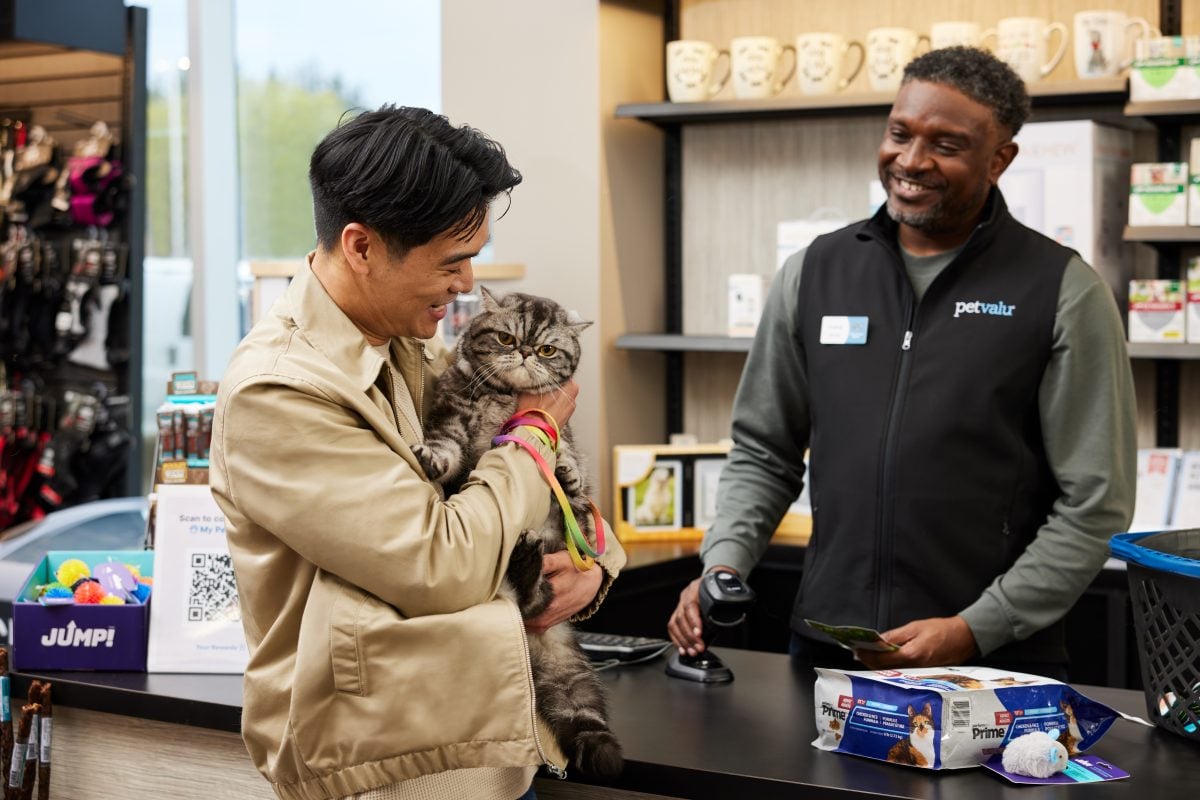
“We’ve done a lot with our loyalty program. We have over three million active members. Those are all things that have helped propel us. The core of it, though, is having really great in-store expertise and franchisees who care about people, their pets, and their pets’ nutrition.”
For the future, Ramier said the company will look at opening another 40 stores or so to expand its reach in the near future. It’s also just finished its supply chain transformation.
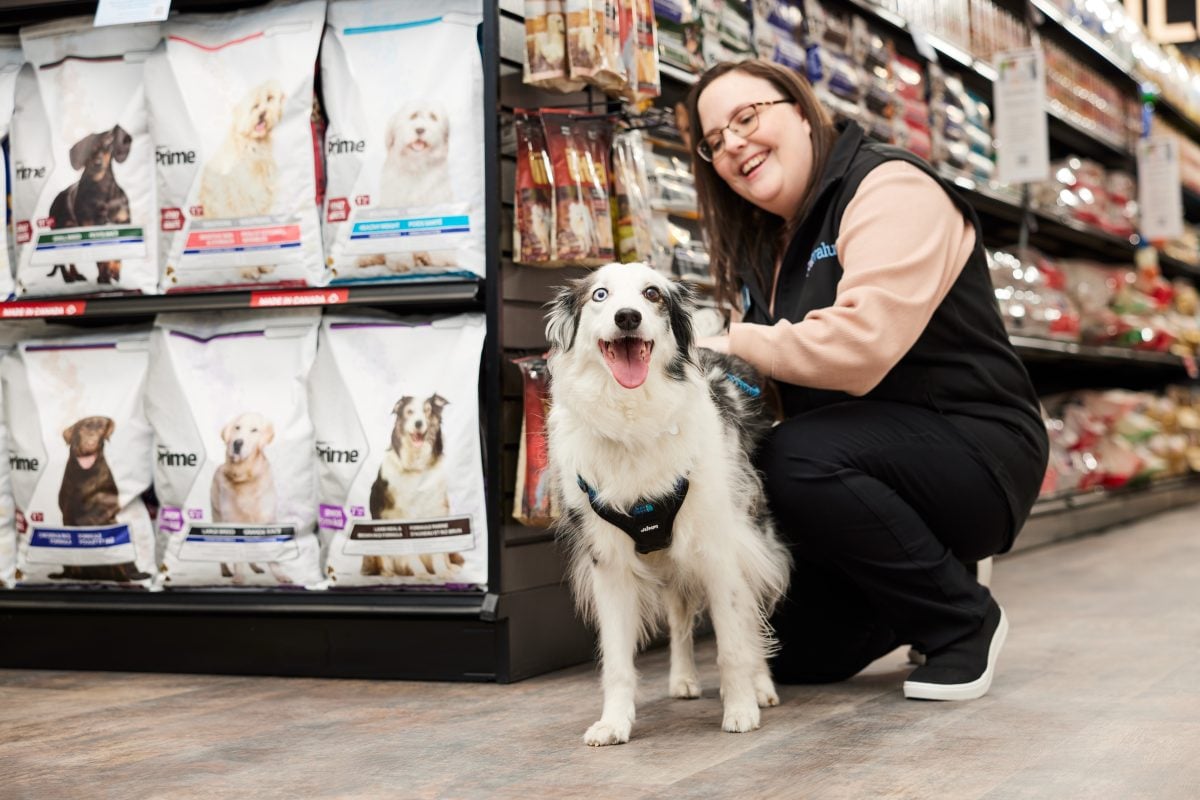
Pet Valu photo
“What our customers should expect from that is we now have distribution centres with more capacity, so we’re expanding our assortment and our offering as part of that,” he said.
“We’re very focused right now around winning the monthly shopper. Think of that as when you are choosing where to buy your pet food this month, convenience matters, quality matters, and so does value.
“We have a pretty exciting program this year around promotional offers and really good everyday pricing, especially with our proprietary brands. That’s a big focus for us this year, as is continuing to get even more out of our loyalty program.
“It is a well-loved and well-used program. We have three million active customers. Ninety per cent of the time, a customer coming into our store uses our loyalty program. So being able to give them even more value as part of that will be important for us this year.”
Pet Valu photo
Ramier said the great thing about the company’s business model is that it can be successful in downtown Toronto or in a small community.
“The ability for our model to service devoted pet lovers in any community and still do that in a really healthy and profitable way is important for us. So you’ll see us expand in more rural locations than we typically have across the country this year,” he said.
“It’s 50 years of us serving devoted pet lovers and their pets, first store in Toronto. We’re really proud to be Canada’s largest neighbourhood pet specialty retailer, and to have the scale we have, and to be able to do that and have this many Canadians come to love and trust us. I’m really honoured to be the CEO there, and happy to be part of the next decade of the journey with them.”
From April 2 to 29 devoted pet lovers are invited to enter Pet Valu’s 50th Anniversary Contest on Instagram and Facebook for a chance to win one of five $500 gift cards. To enter, participants must share a special milestone or meaningful moment they celebrated with their pets such as a birthday, adoption day, learning a new trick, or mastering a puzzle. Participants are also encouraged to tag and give a shoutout to their local store to share about their memorable in-store experiences. Winners will be selected by random draw and announced on May 11.
Pet Valu photo
To show its appreciation for the support provided by devoted pet lovers over the last five decades, Pet Valu will be offering a variety of 50th Anniversary surprises and promotions throughout the year. In May and June, Pet Valu stores across Canada will create custom 50th Anniversary VIP boxes to surprise a selection of their devoted pet lovers. Each VIP box will be curated for the devoted pet lover and their pet by their local store.
From April through December, Pet Valu will shine a spotlight on several great pet product national brands that have a shared legacy of serving Canadian devoted pet lovers. Special anniversary promotions will be announced with each spotlight.