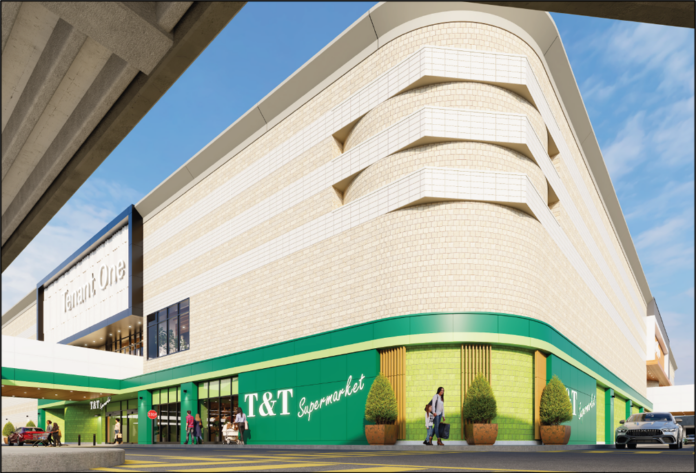
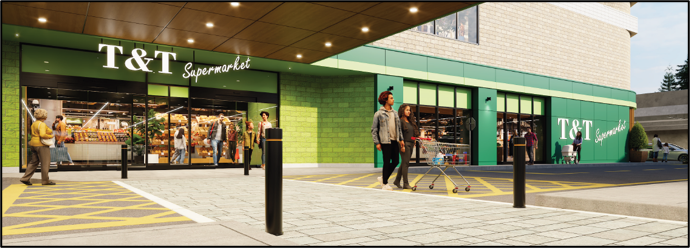
T&T Supermarket, Canada’s largest Asian grocery retailer, says it is expanding its Ontario footprint with a new 68,000-square-foot store at CF Markville, located at 5000 Hwy 7 in Markham.
Situated on the lower level in the former Hudson’s Bay space, it will become the largest Asian grocery store in Markham, said the company.
The new T&T at CF Markville will mark the relocation and expansion of T&T’s current Unionville store, with the transition planned for 2028. This move will allow T&T to grow from its current 50,000 square feet at Unionville to the 68,000 square feet at CF Markville. Customers can look forward to all of T&T’s signature offerings, including fresh fruits and vegetables, popular prepared foods, an in-store bakery, and an Asian beauty section, added the company.
Tina LeeSal Iacono
“Markham has been a key part of T&T’s story, and we see tremendous opportunity to continue investing in this community,” said Tina Lee, CEO of T&T Supermarket. “Unionville has been a wonderful home for us for the past 14 years, and we are proud of everything we have built together with our colleagues and customers. As our customers’ needs continue to grow, this bigger store at CF Markville will strengthen our presence in the market, create an even better experience for our customers, and bring more jobs to the local community.”
“We’re incredibly proud to continue our partnership with T&T as they expand their presence in Canada,” said Sal Iacono, President & CEO, Cadillac Fairview. “Welcoming the largest Asian grocery store in Markham to CF Markville is a major milestone for our centre and we’re so excited to see the energy this new destination will bring to our guests and community.”
CF Markville will be T&T’s 18th location in Ontario, and it also marks the fourth partnership with Cadillac Fairview, following CF Fairview Mall, CF Sherway Gardens in Etobicoke, and CF Polo Park in Winnipeg.
This year, T&T said continues to expand across Canada, with a new store at RioCan Empress in North York and another location in Gilmore, British Columbia.
T&T rendering
T&T Supermarket is Canada’s largest Asian grocery retailer, operating more than 40 stores across British Columbia, Alberta, Manitoba, Ontario, Quebec, Washington, and California. Founded in Vancouver in 1993, T&T is led by second-generation successor and CEO Tina Lee. The company is headquartered in Richmond, British Columbia. T&T Supermarket is owned by Loblaw Companies Limited, Canada’s largest food retailer. Loblaw acquired T&T in 2009, and T&T has operated as a subsidiary ever since.
Cadillac Fairview (CF) is one of the largest owners, operators, investors and developers of best-in-class office, retail, multi-family residential, industrial and mixed-use properties in North America. Wholly owned by the Ontario Teachers’ Pension Plan, with assets under management of $26 billion, CF manages a portfolio of landmark properties across Canada.
Employment declined by 42,000 (-0.2%) in August and the employment rate fell 0.1 percentage points to 60.8%. The unemployment rate was unchanged at 6.4%, according to a report released Friday by Statistics Canada.
Employment fell among youth aged 15 to 24 (-19,000; -0.7%) and edged down (-16,000; -0.1%) among people in the core-age (25 to 54 years old), said the federal agency.
While the overall unemployment rate was unchanged in August, it increased among core-aged men (+0.2 percentage points to 6.0%) and fell for core-aged women (-0.2 percentage points to 5.0%). The unemployment rate was little changed for youth (12.9%) and people aged 55 and older (5.1%), it added.
“Employment declined in business, building and other support services (-20,000; -2.8%), public administration (-8,800; -0.7%), natural resources (-7,700; -2.3%) and utilities (-5,600; -3.5%), while it increased in manufacturing (+22,000; +1.2%),” explained Statistics Canada.
The August decrease follows a cumulative increase of 181,000 (+0.9%) from April to July. On a year-over-year basis, employment was up by 217,000 (+1.0%) in August, it said.
The employment rate—the proportion of the population aged 15 and older who are employed—decreased by 0.1 percentage points to 60.8% in August. The employment rate in August was on par with the rate recorded at the start of the year, and up 0.3 percentage points compared with August 2025.
Manufacturing (+22,000; +1.2%) was the only sector to record a significant increase in employment in August, with most of that increase (+14,000; +1.7%) in Ontario. On a year-over-year basis, employment in this sector was little changed, as the increase in August offset decreases earlier in the year.
Over the 12 months to August, employment growth was concentrated in health care and social assistance (+129,000; +4.5%), information, culture and recreation (+49,000; +5.9%) and transportation and warehousing (+47,000; +4.4%). On the other hand, wholesale and retail trade (-55,000; -1.8%) recorded the largest decline across industries over the same period.
Aditya Obera photo
The number of public sector employees fell in August (-20,000; -0.4%), down for the third consecutive month. Since May, the number of public sector employees has declined by 78,000 (-1.7%) and was little changed in August compared with a year earlier.
Employment was little changed among private sector employees in August but was up by 156,000 (+1.1%) year over year. Similarly, self-employment was little changed in August compared with the previous month but increased by 80,000 (+3.0%) compared with 12 months earlier, noted Statistics Canada.
It said the unchanged unemployment rate follows three consecutive monthly declines in May, June and July totalling 0.5 percentage points.
“Among the 1.5 million people who were unemployed in August, 24.0% were in long-term unemployment, meaning they had been continuously searching for work for 27 weeks or more. This proportion was similar to that of August 2025 (23.0%) and remained above the pre-COVID-19 pandemic average of 17.1% recorded from 2017 to 2019,” it explained.
“The layoff rate was 0.8% in August, slightly below the rate of 1.0% observed 12 months earlier and similar to the average layoff rate (0.9%) observed for the corresponding months from 2017 to 2019 (not seasonally adjusted). The layoff rate refers to the proportion of people who became unemployed due to a layoff between July and August.”
Unemployment rate by province and territory, August 2026
“Looking through the monthly volatility, the 3, 6 and 12 month averages for employment growth were all hovering around 20K in August, which is slightly above the pace of population growth and consistent with the gradual improvement in the unemployment rate that we have seen. However, today’s print seems to tally with other evidence (exports, monthly GDP) that the economy is slowing again in Q3 following a strong second quarter and, with heightened uncertainty regarding US trade, we continue to think that the Bank of Canada will remain on hold even after policymakers expressed greater concern over the inflation outlook earlier this week.”
Doug Porter, Chief Economist, BMO Capital Markets, said: “After a run of surprisingly hearty job results, it seemed Canada was almost due for a reality check. So while this is no doubt a soft report, it’s far from a shock, and in part reflects the ongoing sag in the labour force population. Meantime, sturdy hours worked are a silver lining, and overall employment is still up 1.0% y/y. Still, the August cooldown in employment and average wages will reinforce the Bank of Canada’s holding pattern, and should calm some of the extreme rate-hike pricing in the market (though the big US payrolls number is acting as a heavy offset on that front).”
Andrew Hencic, Director & Senior Economist, TD Economics, said: “After a string of solid labour market reports August showed some give-back. Although disappointing, given the noisy nature of the data a step backwards is not a major surprise after a string of hot reports. The important thing to take away here is that the unemployment rate remained unchanged on the month and is still 0.7 percentage points below last year’s print.
“The labour market has made material improvements over the past year. Unfortunately, trade uncertainty is the focus as new U.S. tariffs took effect late last month and Canada’s counter-tariffs are set to go into effect next week. The prospect of further escalation is hard to dismiss and firmly represents downside risk to the outlook. For the time being, a 6.4% unemployment rate reflects excess supply in the labour market, and we continue to expect the Bank of Canada to remain on hold.”
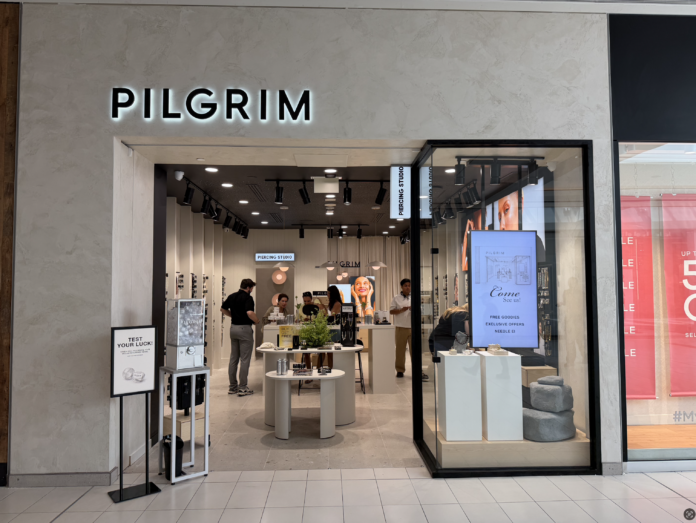
Pilgrim has opened its 11th Canadian store at Oshawa Centre, adding another Ontario location as the Scandinavian-Canadian jewelry brand prepares for several years of continued expansion across the country.
The new store opened July 24 and follows a series of openings that have taken Pilgrim from a predominantly Quebec retail presence into a larger network spanning Ontario and Quebec. Robert P. Hayes, CEO of Pilgrim North America, told Retail Insider that the company is currently planning for roughly three new stores a year over the next three years. The pace could increase if sales and financing allow.
Pilgrim has identified a larger list of markets it would eventually like to enter, but Hayes said the company is prepared to wait for the right real estate.
“We have our plan: three stores a year,” Hayes said. “It could be more. It all depends on my debt ratio and the appetite that we have.”
The expansion is also being shaped by what Pilgrim is seeing from Canadian consumers. Hayes said suburban stores are currently performing better than downtown locations within the company’s network, while Pilgrim is finding opportunities in communities where housing costs and household incomes may leave consumers with more room for discretionary spending.
ROBERT P. HAYES
Why Oshawa Made Sense
Hayes said Pilgrim had been studying population growth east of Toronto, including Oshawa, Bowmanville and surrounding communities. New housing and the arrival of younger families helped make Oshawa Centre attractive to the company.
“We’ve seen through the demographics that Bowmanville, Port Hope and that area are growing, with people being able to buy homes but still having enough money at the end of the day to spend on nice things,” Hayes said.
Durham Region has continued to add population. The region was estimated to have approximately 793,800 residents at the end of 2025, with Oshawa at approximately 196,850. Household counts across Durham have also increased since 2021.
Hayes said Pilgrim looks beyond population numbers when considering a new market. The company also studies household incomes and living costs, particularly given that jewelry is a discretionary purchase.
“When a house is reasonably priced and they make a good salary, then there’s money at the end of the month they can put away for savings, but they also want to splurge on things for themselves,” he said.
Oshawa Centre itself has also been changing. The approximately 260-store shopping centre includes Zara, Uniqlo, Aritzia, lululemon, Sephora, H&M, Nespresso, Swarovski and other national and international retailers. Primaris REIT acquired full ownership of Oshawa Centre in 2025 and estimated approximately $242 million in total CRU sales volume at the property at the time of the transaction.
Hayes said Pilgrim had been watching the mall and wanted a particular position within it. The new boutique is near Zara, Nespresso and H&M.
Suburban Stores Gain Ground
The Oshawa opening follows Pilgrim’s February 2026 opening at CF Masonville Place in London, Ontario. Hayes previously described London as an important test of Pilgrim’s appeal in an Ontario market without the level of tourist traffic found at CF Toronto Eaton Centre and CF Rideau Centre.
“We perform better in suburban stores than in downtown stores,” Hayes said.
That performance is influencing Pilgrim’s real estate decisions, although Hayes continues to see a role for urban stores that can introduce the brand to customers who may be less likely to shop in traditional malls.
The economics of each store remain important because Pilgrim doesn’t have the scale of the largest international jewelry chains. Hayes said bigger competitors can commit to large numbers of locations and absorb uneven performance across a network. Pilgrim has to be more selective about individual sites.
“I’m a smaller distributor,” he said. “Sometimes I have to ask: Is it the right location? Is it the right price? And is there an appetite?”
Oshawa Centre. Image: Pilgrim
Waiting for the Right Real Estate
Hayes regularly walks shopping centres and identifies spaces that interest him, sometimes years before they become available. Pilgrim keeps track of those locations and lease expiries and stays in contact with landlords. When a space becomes available, the company may already have been watching it for some time.
“We wanted to be in front of Zara, near the Nespresso and the H&M,” Hayes said of Oshawa Centre.
Store size, rent, traffic flow, neighbouring tenants and expected sales all factor into the decision. Hayes said Pilgrim’s current financial capacity supports approximately three openings annually. Faster growth is possible, but it would also require the people and resources to open, market and operate the additional stores properly.
Pilgrim is evaluating opportunities beyond its existing Ontario and Quebec store base, including markets in Western and Atlantic Canada. The company currently has no standalone stores in Western Canada.
A National Footprint Beyond 11 Stores
Pilgrim already reaches considerably farther across Canada through wholesale.
Hayes said the brand is available through more than 550 retail doors across the country, ranging from independent boutiques carrying smaller assortments to larger wholesale accounts and shop-in-shops.
Wholesale has recently been particularly strong. Hayes said Pilgrim’s orders at a recent Toronto trade show were 56 per cent higher than at the comparable event a year earlier. The wholesale business had already been running approximately 32 per cent ahead season-to-date before the show.
The orders were for the Christmas selling period, including October, November and December deliveries. Hayes said retailers had been more cautious in recent years, waiting longer and placing smaller orders, while the latest show suggested some buyers were becoming more comfortable committing to inventory earlier.
Pilgrim’s growing brand awareness may be contributing to the results, although Hayes said he also noticed stronger activity among other exhibitors and buyers at the show.
Wholesale gives Pilgrim another way to establish a larger presence in markets where the company isn’t likely to open a corporate store. In selected independent retailers, Pilgrim is developing branded shop-in-shops that typically occupy about 200 to 300 square feet, with a wall display and table.
“If I’m in a smaller rural area, I’m never going to open a store, but I still have a lot of loyal customers,” Hayes said.
Some of the shop-in-shops generate substantial sales despite their small footprint, he added. The format gives Pilgrim a larger assortment and more visible brand presentation inside an existing retailer without taking on a separate store lease.
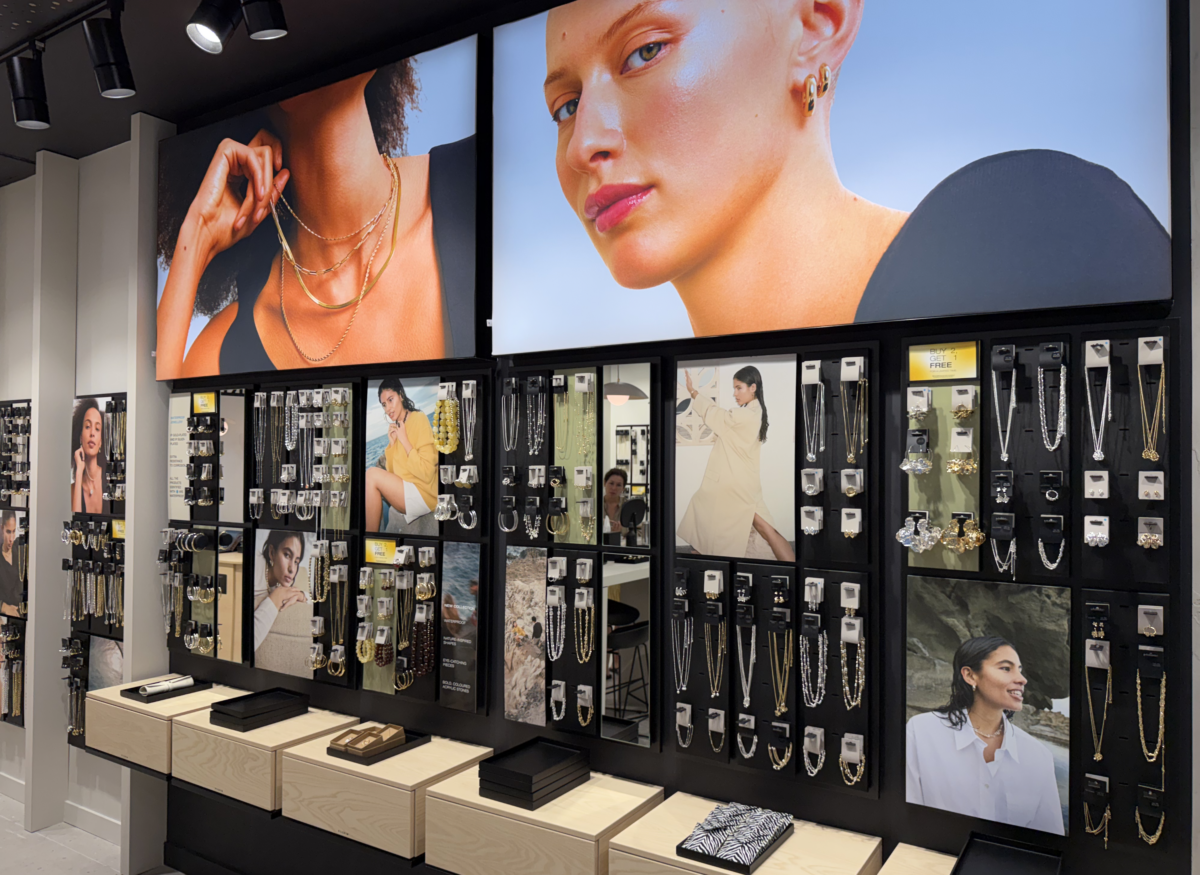
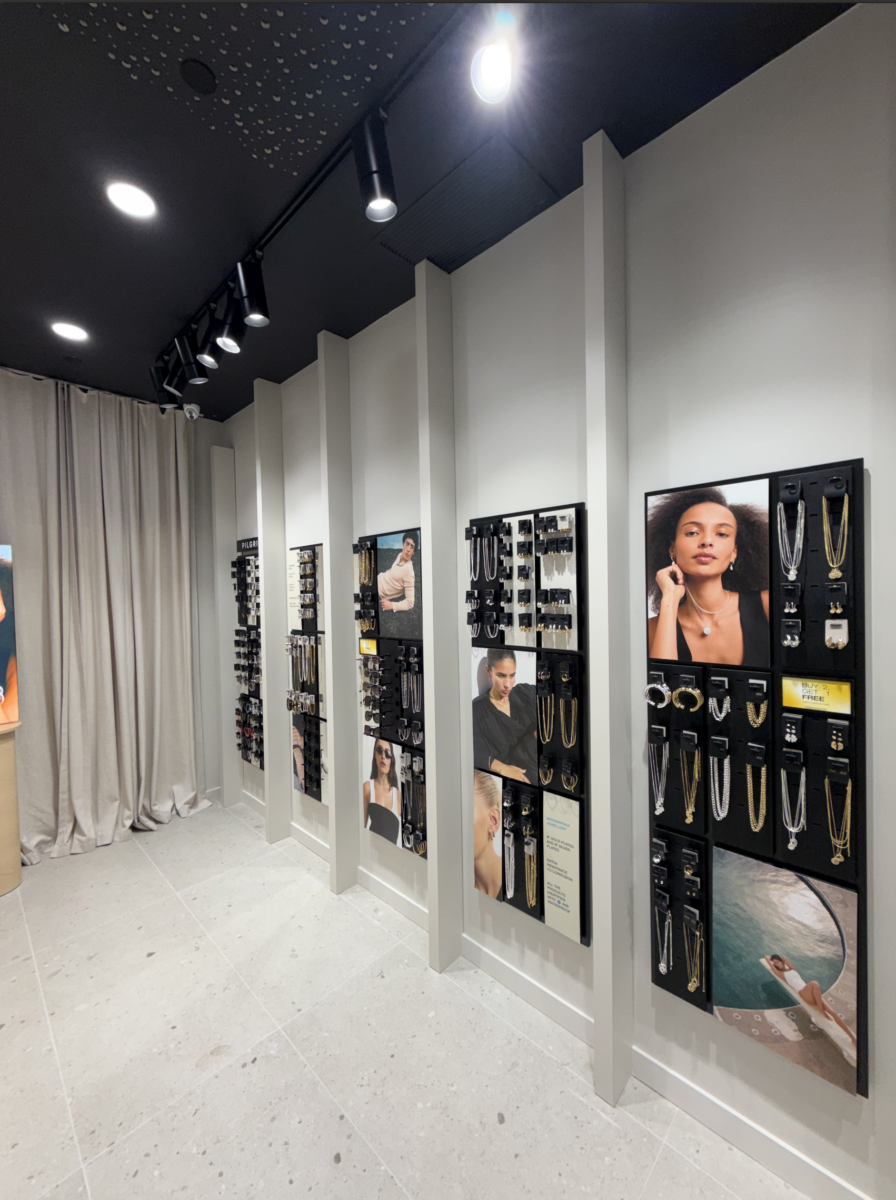
Oshawa Centre. Image: Pilgrim
Piercing Becomes a Bigger Part of the Store
Professional needle piercing has become a growing part of Pilgrim’s Canadian business.
All 11 stores offer piercing with certified piercers. Five locations currently have dedicated piercing studios, and Hayes said the company plans to expand the studio format across the network. At some stores, piercing now represents approximately 15 per cent of business.
Hayes said stores with dedicated studios have generally seen stronger piercing activity. At Royalmount in Montreal, customers are booking appointments and travelling to Pilgrim specifically for the service even when overall traffic at the shopping centre is relatively light.
“The ones that have the studio, that’s where we see the increase,” he said. “At Royalmount, as an example, even though there’s not a lot of traffic, people are booking the appointments and coming for the piercing, so it’s like us driving our own traffic.”
The service gives customers another reason to visit a store when the jewelry itself can also be purchased online. Hayes said Pilgrim sees mothers and daughters coming in together, along with friends and groups booking appointments.
Pilgrim requires its piercers to complete training that includes CPR and blood-borne pathogen education, according to Hayes. The company uses needle piercing and has been adding dedicated spaces for the service as stores are opened or renovated.
Consumers Are Watching Their Spending
While Pilgrim continues to add stores, Hayes said its own retail business is currently relatively flat after stronger growth in previous periods. Wholesale has recently been performing better.
He is seeing particular pressure among younger customers. Gen Z shoppers remain interested in the brand, Hayes said, but they are being more careful with discretionary purchases. Conversion has held up better than basket size, suggesting customers are still buying but spending less when they do.
“They’re really thinking about every dollar that they spend,” he said.
Hayes believes housing and living costs are contributing to the change. Pilgrim’s own data show stronger spending in some markets where customers have solid incomes and more manageable housing costs, he said.
Those differences are becoming increasingly important when Pilgrim assesses new markets. Oshawa is one example of a location where the company believes population growth and household economics support another store.
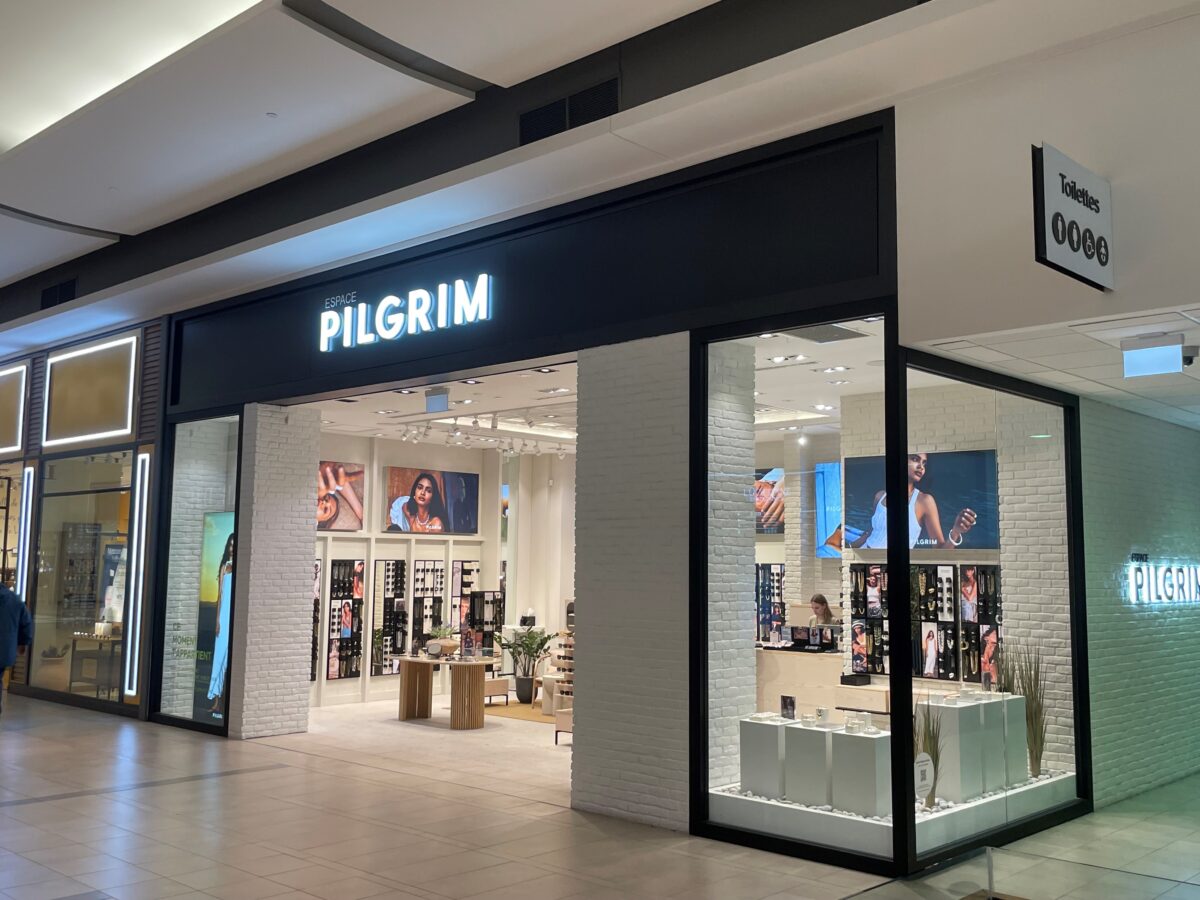
Pilgrim at CF Carrefour Laval (Image: Pilgrim)
Stores, Wholesale and Digital Growth
E-commerce continues to grow as well. Pilgrim recently began using Shopify Collective to support drop-shipping with wholesale partners, according to Hayes.
The company is also working to connect its loyalty program more closely with stores, including technology that can help staff identify existing members and available offers earlier in a customer’s visit.
Pilgrim now reaches Canadian customers through its own boutiques, independent retailers, shop-in-shops and online. Piercing is becoming another important part of the store business as dedicated studios are added across the network.
For Hayes, adding corporate stores remains a measured process. Pilgrim has room to expand beyond its current Ontario and Quebec footprint, but the company is prepared to wait for individual markets and spaces that meet its requirements.
“It’s strategic opportunity based on our research and the locations that we would really want in terms of flow within the malls,” Hayes said.
Pilgrim’s current plan calls for roughly three new stores annually over the next three years, alongside continued expansion of its wholesale and shop-in-shop business.
Earlier this year, Typical, co-founded by Lyndon Cormack, launched its first line of towels, integrating two per cent spandex into conventional cotton to improve flexibility and comfort.
The startup developed a stretchable towel product it says addresses an overlooked segment in the home goods market, signalling an expansion strategy that combines design innovation with targeted retail distribution.
It’s been an eventful year for the brand. Typical won the esteemed Red Dot Design Award in the product category, where judges hailed the product as, “Finally, a towel that stays in place when worn!”, and it was recognized by Oprah Daily with a Bath O-Ward as their Most Innovative Towel.
It is now launching its second collection of bath towels followed by its newest product, The Typical Hair Towel, in early November. On the retail side, Typical has been enjoying early expansion and is now selling through The Knot, Anthropologie, and Nordstrom, while building out corporate gifting and hospitality channels alongside its DTC business.
Lyndon CormackTypical photo
In an interview with Retail Insider, Cormack spoke about the company’s growth and plans.
Question: Typical has expanded into retailers including The Knot, Anthropologie, and Nordstrom. What factors made those partnerships possible, and what does your retail expansion strategy look like going forward?
Answer: When you build something genuinely new in a category that has not changed in a long time, people notice. Retailers like these are in the business of finding fresh ideas for their customers, and they place those ideas next to brands that are world-class at what they do. Sitting on a shelf beside a brand like that is the best introduction we could ask for.
I have to remind myself that we only launched in February, so we are about six months in. Being in these kinds of places at this stage tells us the product is doing the work.
Going forward we are being deliberate about who we add. We would rather be in the right doors than in a lot of doors. We have some incredible partners already, and the job now is to grow with them rather than just add names to a list.
Q: Winning the Red Dot Design Award and an Oprah Daily Bath O-Ward has brought significant recognition. How have those accolades influenced consumer demand and retailer interest?
A: It’s an honour to win both, and it validates the work on two fronts. Internally, it tells our team that people outside the building love what we are making, which matters more than you would think when you are still small. Externally, it’s the authorities in this space saying we have done something innovative and that they want to see the category change.
For the consumer, it closes a gap. Any new brand is a little bit suspect at first. There is always that moment of “is this actually worth it?” We do exactly the same thing ourselves with products we haven’t tried yet. When the recommendation comes from a source people already trust, that hesitation goes away, and we’re seeing it convert.
Typical photo
Q: You’re launching a second bath towel collection and a new hair towelin November. How do these products fit into your broader product innovation roadmap?
A: The September collection builds directly on what we’ve learned so far. We took the data and the consumer interest from the first collection and expanded into the spaces where people told us they wanted us.
The hair towel is a product I’m really excited about. The stretch technology translates really well into that category, arguably better than it does into bath. Everyone who has tried the original prototype loves it, and that is usually the signal we look for. When people start asking where they can buy one before you have even finalized the price, you know you’re onto something.
Q: Beyond direct-to-consumer sales, you’re growing your corporate gifting and hospitality businesses. How important are those channels to Typical’s long-term growth, and what opportunities do you see there?
A: Hospitality is a discovery channel. A guest at a spa, a hotel or a rental has a short window with the product, and if they like it they turn it over and look at the label. That’s a very efficient introduction, and plenty of great brands have grown that way.
It also solves something real for the operator. These properties are often competing with a near-identical property next door, so the question becomes how do you actually feel different. Putting a genuinely different product in the room is one answer, particularly at the premium and curated end of that market.
Corporate gifting works on the same logic. You want the person opening the box to love it. An award-winning product in a category nobody expects to be interesting does that. It becomes a “try this, I think you will love it” gift rather than another branded object that ends up in a drawer.
Typical photo
Q: Looking ahead to 2027 and beyond, what is your vision for Typical’s retail footprint, and are there additional product categories or international markets you’re planning to pursue?
A: We’re currently focused on the US and Canada. The plan is to layer in retailers who are special and who serve their customers extremely well, rather than chase distribution for its own sake.
New categories are always of interest. The hair towel is the immediate one, and part of executing that properly is finding the best-in-class beauty retailers who want to push the category alongside us.
With regard to international, we get a steady amount of inbound and we are working through what the right go-to-market looks like. For now, the focus is delivering our vision in North America and continuing to innovate on product. We’re six months in and it really does feel like we are just getting started.
Forum Thermal is set to become Calgary’s largest architecturally-driven urban thermal spa, with 18,000 square feet of indoor and outdoor space.
Located at the intersection of Calgary downtown and Beltline, in the The Oliver Block, Forum Thermal is slated to open in Late 2026.
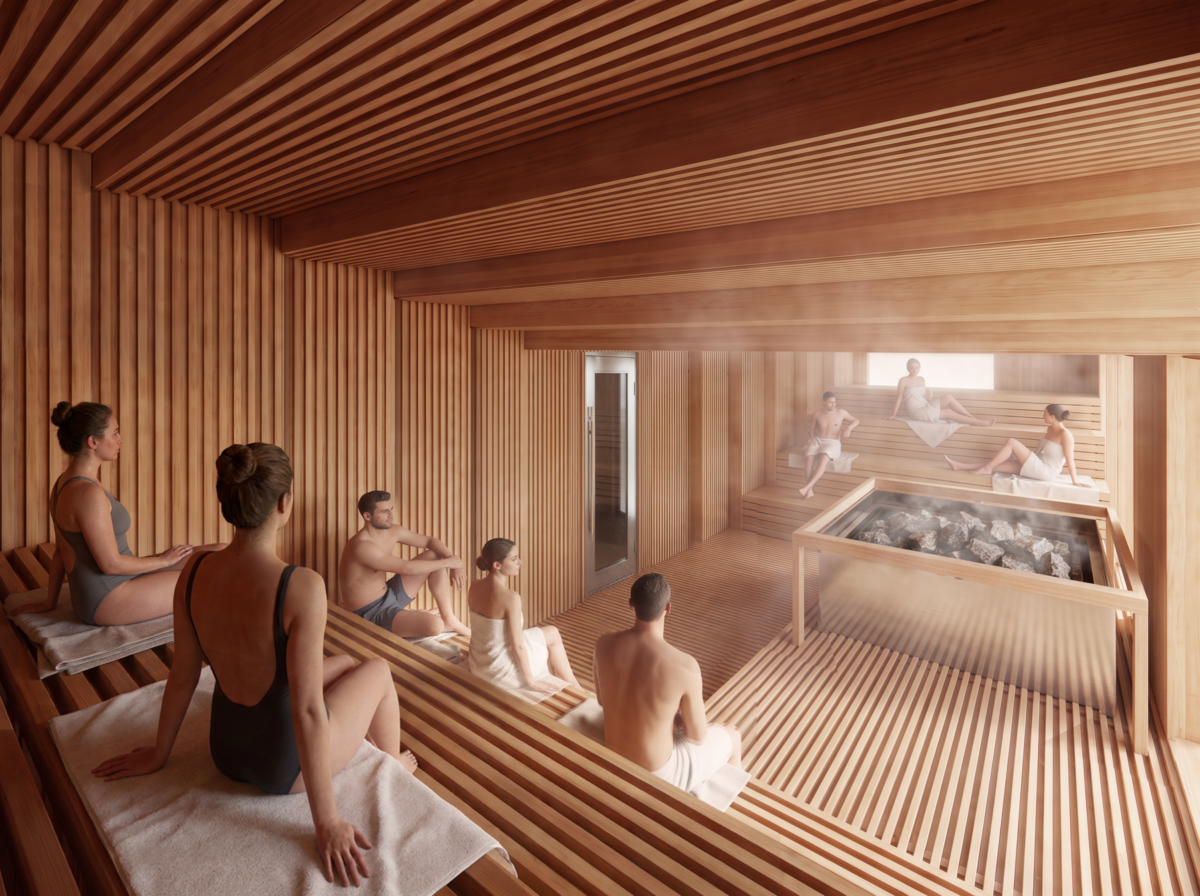
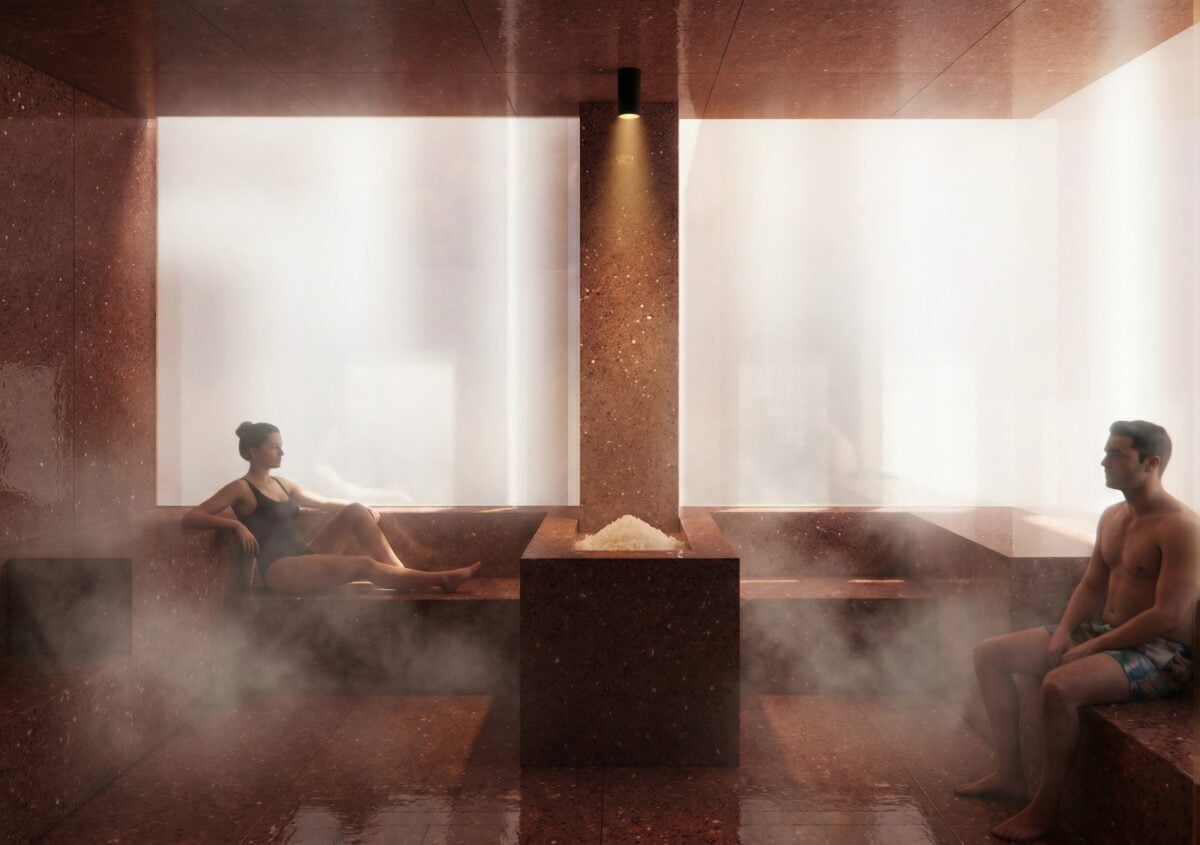
Forum Thermal is shaped by the team behind some of Canada’s’s most influential thermal experiences. With six signature pools, three saunas and two steam rooms, Forum will offer a series of interconnected experiences.
An exterior thermal pool wraps around the south, west and north terraces. Designed by HEREBY, the team wanted to weave the downtown surroundings into the experience in unexpected ways.
Question: What inspired the concept for Forum Thermal, and what does creating Calgary’s first unscripted thermal environment mean in the context of the city’s evolving hospitality and wellness landscape?
Answer: The concept for Forum Thermal grew from our founders’ deep involvement in the North American thermal spa industry and a collective desire to bring that experience to our hometown. We saw an opportunity for a large-scale, unapologetically urban thermal spa in the heart of Calgary, a city with a growing urban population, and a growing interest in wellness, but without a large-scale thermal experience within the urban core.
The idea of creating Calgary’s first “unscripted” thermal environment comes from our belief that wellness is personal. There shouldn’t be a prescribed sequence or a single “right” way to experience thermal wellness. At Forum, guests can choose how they want to move through the space and what they need from it that day. They might spend time in a social or silent sauna, move between hot and cold experiences, take a cold shower, or simply find a place to relax. The experience is intentionally flexible and can evolve with the individual.
That approach also reflects how we see Calgary’s hospitality and wellness landscape evolving. Many urban wellness spaces tend to be smaller and more focused, while larger thermal destinations are typically located outside the city. Forum brings the breadth and variety of a larger thermal destination into an accessible urban setting, combining indoor and outdoor spaces with a wide range of experiences.
Ultimately, we see Forum as part of Calgary’s growing wellness ecosystem, and as a reflection of where the city is heading. As wellness becomes increasingly integrated into people’s life, we want to give Calgarians more range, and a new way to experience thermal wellness without leaving the city.
Nicholas DykstraForum Thermal rendering
Q: How did the architecture and design of the Oliver Block shape Forum Thermal’s experience, particularly the decision to connect the indoor and outdoor thermal spaces with the surrounding downtown environment?
A: We searched Calgary for nearly two years for the right location. After touring the base of The Oliver West, we knew we had found it. The location between the Beltline and Downtown placed Forum at the interface of two distinctly rich urban environments: a dense residential and hospitality neighbourhood on one side, and Calgary’s employment, hotel, and cultural core on the other. With Forum, we saw an opportunity to create a thermal spa experience that was connected to the energy of these communities rather than separated from it. Plus with over 800 residential units, there is an existing community right above the space.
The architecture and interior design of the Oliver, particularly the ground level lobbies, restaurants and common spaces all exude an elevated urban experience that continues with the design of Forum. The base of the east tower has Luca and Gatsby’s, regarded as two of Calgary’s finest restaurants. We expect Forum to be considered in the same class.
The building’s structure also presented a unique opportunity. The main floor was designed with a large clear span and a very strong floor slab. This allowed us to introduce multiple pools in the interior in an open, column free environment. More importantly, a series of narrow exterior spaces immediately outside our indoor space had little functional role within the rest of the development. We saw their potential to become an extension of the thermal experience, with outdoor pools, saunas, and relaxation spaces that connect guests directly to the surrounding city. This experience will be unique for an urban thermal spa.
The proximity of the railway was another important part of that experience. Rather than treating the railway as something to screen out, we embraced it as part of the environment. Guests can sit in a pool or sauna and simply watch the trains pass by. It creates a sense of connection to the movement and activity of downtown while still offering a place to pause and relax.
Ultimately, the design of Forum grew from the opportunity to blur the boundary between the spa and the city: bringing the outdoors in, extending the experience outside, and allowing the energy of Calgary to become part of the experience rather than something separate from it.
Forum Thermal rendering
Q: What can guests expect from the six signature pools, three saunas and two steam rooms, and how did you approach creating a thermal experience that feels distinctly Calgary?
A: Guests can expect range, rather than prescribed process. With six pools, three saunas, and two steam rooms, Forum is designed as a landscape of different experiences: indoor and outdoor, social and silent, hot and cold. Guests are free to explore the environment according to their state of mind and interest, with each space offering its own identity, atmosphere, and connection to the city beyond.
The three saunas are deliberately different. The largest is a social sauna seating more than 36 people, designed for aufguss and other wellness rituals. The other two saunas are smaller and silent: one features uniquely positioned seating tiers and an entrance from above, while the outdoor sauna offers views of Calgary’s skyline and passing trains.
The two steam rooms also offer distinct experiences. The larger can accommodate more than 20 people across three tiers of benches and includes two cold showers inside. The smaller incorporates a salt-scrub exfoliation experience, with handheld showers for cleansing.
The six pools create another layer of variety, ranging from hot to warm to cold, both indoors and outdoors. Each has its own views, seating, and relationship with moving water, including jets, air bubblers, and waterfalls.
Beyond this, there are a range of relaxation spaces, offering silent meditation experiences, to more social communal lounge areas.
This variety is also what makes the experience distinctly Calgary. Some spaces will feel dark, quiet, and inward-looking, while others will be filled with sunlight and open directly toward the city. Throughout the experience, guests remain connected to Calgary’s skyline, streets, and railway. There isn’t one prescribed way to experience Forum, but wherever you go, the city is part of the experience.
Forum Thermal rendering
Q: Who do you see as the core audience for Forum Thermal, and how do you expect the concept to fit into the daily lives of Calgarians, visitors and downtown workers?
A: We see Forum’s audience as broad, much like the larger Nordic spas found across Canada. Our goal is not to depend on a small group of highly frequent visitors, but to become an experience that many people can incorporate into their lives a few times a year. We see our core audience visiting roughly two to eight times annually, while welcoming those who want to make Forum a more regular part of their routine.
That audience includes people who live and work in Calgary’s inner city, as well as those who live further out but come downtown for its restaurants, culture, entertainment, and hospitality. Similarly, we’re confident that Forum will be an attractive and unique experience for travellers, being tourist or business. Ultimately, Forum is designed for anyone who is wellness acquainted or curious and wants to experience the city in a different way.
We also see Forum as complementary to the rest of a person’s day rather than an isolated destination. Because we aren’t a full-service food and beverage venue, a visit might naturally be paired with lunch or dinner, a show, drinks, or another downtown experience before or afterward.
In that sense, Forum is about more than wellness. It offers a new way to experience Calgary, one that connects people to the energy, culture, and hospitality of the city. We hope Forum becomes a modest but meaningful part of many people’s lives, fitting naturally into the many different ways Calgarians and visitors experience our growing urban culture.
Forum Thermal rendering
Q: With 18,000 square feet of indoor and outdoor space and an opening planned for late 2026, what role do you hope Forum Thermal will play in Calgary’s Beltline and downtown neighbourhoods, and what does its launch say about the city’s appetite for new wellness and hospitality concepts?
A: We want Forum to become a positive, healthy, and welcoming new destination within Calgary’s already vibrant inner-city culture and hospitality scene. With 18,000 square feet of indoor and outdoor space, we see an opportunity to create a place where locals, regional visitors, and tourists can come together and experience that city, and thermal wellness on their own terms.
Calgary has an incredible range of cultural, hospitality, and entertainment scenes, but there are relatively few places where people from those different worlds can come together around a shared experience. We see Forum as helping to fill that gap.
As its name suggests, Forum is intended to be a physical forum for people to share time and space. Whether someone is coming from work downtown, exploring the Beltline, visiting from elsewhere in the region, or experiencing Calgary as a tourist, we want Forum to offer a place to pause, connect, and recharge.
We also believe the launch of Forum reflects Calgary’s growing appetite for wellness and hospitality experiences, particularly ones that feel genuinely rooted in the city itself. Our hope is that FORUM contributes to that evolution by creating a space that is enriching, energizing, and welcoming, while becoming a meaningful part of Calgary’s growing inner city.
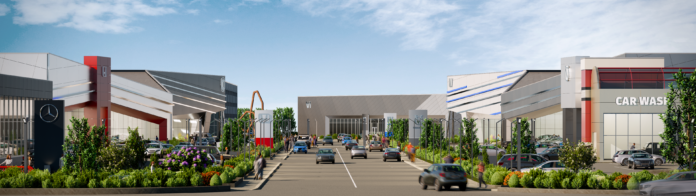
OpenRoad Auto is planning a 16-acre automotive development in Surrey’s Newton neighbourhood that will include multiple dealerships, commercial space and more than 1,000 vehicle parking stalls.
The Surrey Auto Loop, located at 13340 76 Avenue, is being developed in partnership with Conwest Developments and will include seven lots and approximately 166,000 square feet of commercial space. Surrey Honda and Mercedes-Benz Surrey are among the first confirmed dealerships.
The project is expected to bring expanded automotive sales and service facilities to the area, as well as new employment and private investment. Construction is expected to begin in early 2027, with additional dealership brands to be announced.
“We thank the City of Surrey and our partners at Conwest Developments for making Surrey Auto Loop possible,” said Christian Chia, CEO of OpenRoad Auto. “There is no doubt Surrey is B.C.’s fastest-growing city. The Surrey Auto Loop will allow us to serve the Surrey community with even more options, more brands, and more of the people-first service that OpenRoad is known for, all in one convenient destination.”
The development will include dealership showrooms, offices and service facilities across multiple buildings, along with more than 1,000 vehicle parking stalls.
Christian ChiaBrenda LockeBen Taddei
The project follows the completion of a rezoning process led by Conwest that converted an underutilized 16-acre industrial site into a planned automotive development.
A City of Surrey planning report endorsing the project said the automall reflects sound planning principles and supports the employment and economic growth objectives outlined in the city’s Official Community Plan.
“The Surrey Auto Loop is a major investment in Newton and another sign of the growth and opportunity we’re seeing across our city,” Surrey Mayor Brenda Locke says. “It will create local jobs and bring new economic activity to the area. I want to thank OpenRoad Auto and Conwest Developments for their partnership and confidence, and for choosing Surrey for this project.”
Conwest says its role in the project extended beyond the sale of the property and included working with OpenRoad and the City of Surrey during the rezoning and approvals process.
OpenRoad Auto photo
“When OpenRoad approached us with their vision for Surrey Auto Loop, we immediately recognized the site’s potential and the opportunity to create something that would have a meaningful, long-term impact on the City of Surrey,” says Ben Taddei, Chief Operating Officer and Partner, Conwest Developments. “Our involvement extended well beyond the sale of the land. We worked closely with OpenRoad and the City of Surrey throughout the rezoning and approvals process to help create a development-ready site that will bring significant private investment, adding hundreds of jobs and another important step in Surrey’s continued evolution as a major employment and economic centre.”
OpenRoad Auto, founded in 2000, describes itself as B.C.’s largest automotive dealership group. The company says it employs more than 2,500 associates and represents 23 brands across 44 full-service locations, including 37 dealerships in B.C. and Ontario and seven collision centres.
The company says the Surrey Auto Loop will add another location to its broader dealership network. Additional brands and further details about the development are expected to be announced in the future.
One in five (18%) small exporters and 11% of importers affected by the Canada-U.S. trade war say they would stop being financially viable if the trade war lasts three months or more, according to a new survey from the Canadian Federation of Independent Business (CFIB).
Nearly half of small exporters (46%) and a similar share of small importers (49%) have products directly hit by the latest round of tariffs and counter-tariffs. Manufacturing, wholesale, retail and construction are among the most affected sectors, said the CFIB.
“We cannot allow small business owners to become cannon fodder in the trade war. If we’re going to retaliate, then we need to make sure government supports protect the small businesses being put on the front lines of the trade war,” said Dan Kelly, CFIB president. “While a majority small firms are generally supportive of the decision to walk away from trade talks and impose counter-tariffs, the burden falls especially heavily on some segments of Canada’s independent business community. Nine in ten small firms believe counter-tariff revenue should be used to support the businesses hit hard by the trade war.
“Government support programs to date are not set up to deal with tens of thousands of small businesses, particularly as counter-tariffs begin to hit next week. We need a simple direct support program to help businesses on the U.S. and Canadian tariff lists in addition to broad-based tax relief to help all small firms that will be hurt by the trade war.”
Dan KellyJasmin Guénette
CFIB is proposing three important measures:
A dedicated Small Business Tariff Relief (SBTR) program, where impacted exporters and importers who can provide direct evidence they paid the tariffs directly, or adjusted prices to absorb part or all of the tariff, would be eligible to receive initial tariff relief up to $70,000 CAD.
An SME Desk for Tariff Remissions to speed up decisions on eliminating Canadian retaliatory tariffs if there are major negative impacts on the industry or if alternatives to the U.S. product are not readily available.
Immediate tax relief for all small businesses in the form of a Small Business Corporate Tax Rate cut from 9% to 6%, retroactive to January 1, 2026, and an increase to the Small Business Deduction threshold from $500,000 to $700,000 with future indexation to inflation.
“Small businesses are being squeezed from multiple directions, and both the new tariffs and counter-tariffs will add a significant burden at a time when we’re already grappling with weak economic growth, sluggish consumer demand and some of the highest operating costs we have ever seen,” said Jasmin Guénette, CFIB vice-president of national affairs. “We’re talking about people who are being asked to put their entire livelihoods on the line so that Canada can push back. The government needs to move with urgency and get relief measures in place as they continue to work towards a stable, long-lasting trade deal.”
The CFIB is Canada’s largest association of small and medium-sized businesses with 103,000 members across every industry and region.
IKEA is using handcrafted miniature homes in three cities to launch a new in-store experience focused on helping customers make better use of limited living space without making major expenditures.
The Swedish furniture retailer said Thursday that miniature homes have been installed in public locations in Melbourne, Chengdu and Beijing as part of the launch of IKEA open house, an in-store program running from late August through September.
The initiative comes as homes are increasingly being used for multiple purposes, including workplaces, creative studios, classrooms and living spaces. IKEA said its research through home visits and conversations with people around the world found that many people are looking for practical ways to improve their homes, while affordability can determine whether those ideas become reality.
“People usually don’t aim for the perfect home, but the one that feels easier to live in,” said Javier Quiñones, Global Commercial Manager, Ingka Group (IKEA). “We’re putting even greater focus on creating a better everyday life at home and making sure the solutions we offer are accessible and affordable.”
Javier QuiñonesChristopher Robin Nordström
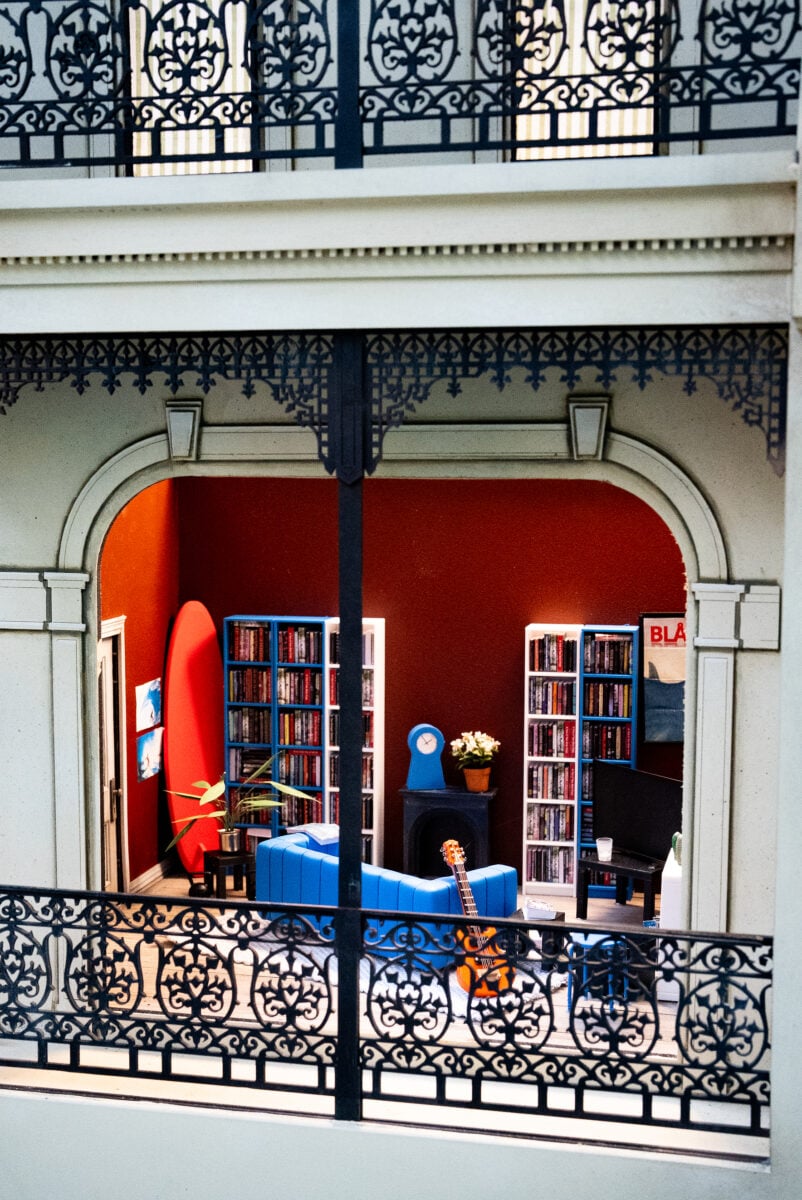
The miniature homes were created in partnership with Stockholm-based miniature artist Christopher Robin Nordström, known as @TokyoBuild. Each was constructed by hand at a 1:12 scale and designed to reflect the characteristics and routines of the city where it is displayed.
In Melbourne, a BILLY bookcase is featured with miniature novels and art prints, along with references to the city’s sporting culture.
In Chengdu and Beijing, METOD kitchens are among the central features of the miniature homes. IKEA said the installations are intended to demonstrate how different cultures, routines and priorities can influence the way people use their homes.
The company said the installations are a public component of the broader IKEA open house program, which is also taking place inside stores.
IKEA Miniature Home
Visitors to participating stores can explore storage and organization products, room settings, special offers and ideas aimed at making existing living spaces more functional.
Nordström said working at miniature scale required decisions about what to include in each home.
“When you build in miniature, you can’t include everything,” said Nordström. “Every object has to earn its place. You quickly realise that a home isn’t defined by how much it contains, but by the things people choose to make room for.”
The open house experience is scheduled to continue through September, while the miniature installations in Melbourne, Chengdu and Beijing provide a public demonstration of the company’s focus on space utilization and affordability.
A woman shopping with her son in a grocery store. Photo: Unsplash
Ottawa’s decision to extend the federal fuel-tax suspension just days before a new round of counter-tariffs takes effect suggests that the government has finally done its homework on affordability.
The federal excise tax will remain suspended until January 31, 2027, saving motorists 10 cents per litre on gasoline and four cents per litre on diesel. It will return at half its normal rate for February and March before being fully restored in April. For the food sector, the diesel measure is particularly important. Almost everything Canadians eat spends time on a truck, while farmers, processors, wholesalers and retailers all depend heavily on energy.
The timing is no coincidence. On September 8, Canada will impose counter-tariffs of 15, 25 and 50 per cent on $27.6 billion worth of American goods. By extending fuel-tax relief, Ottawa is effectively removing one source of inflationary pressure just as it introduces another.
That is more coherent than what Canadians witnessed last year.
On March 4, 2025, the Trudeau government imposed 25 per cent counter-tariffs on selected American foods and other consumer goods. At the time, our Agri-Food Analytics Lab was among the very few voices warning that these tariffs would ultimately function as a tax on Canadians.
Tariffs are collected at the border, but their economic cost rarely stays there. Importers may initially absorb part of the increase, but over time the burden travels through distributors, processors and retailers before reaching consumers. Domestic suppliers may also raise their prices when competing American products become more expensive.
The accompanying grocery-inflation chart illustrates what followed. Food inflation stood at 2.8 per cent when the counter-tariffs were announced in February 2025. After the tariffs took effect, grocery inflation rose to 3.8 per cent in April. It fluctuated during the summer before reaching 4 per cent in September and eventually peaking at 5 per cent in December.
The chart’s dashed line presents a conservative scenario of what grocery inflation might have looked like without the counter-tariffs. It assumes a maximum difference of 0.5 percentage points. This is an illustrative counterfactual, not a claim that tariffs alone caused every movement in food prices. Exchange rates, commodity markets, labour, transportation and weather all mattered.
But the broader conclusion is no longer seriously debatable. Subsequent Bank of Canada research found that approximately one-quarter of the 2025 counter-tariffs was passed through to retail prices. Tariffed products became roughly 6 per cent more expensive relative to comparable untariffed goods, adding about 0.3 percentage points to overall consumer inflation. When most counter-tariffs were removed on September 1, prices moved back toward those of comparable products fairly quickly.
In other words, Canadians paid part of Ottawa’s retaliation bill. Our warning was not ideological; it was Economics 101.
This matters even more when viewed against Canada’s deteriorating food-security performance.
The second chart compares the prevalence of moderate or severe food insecurity among 14 G20 countries for which comparable data were available. Between 2017–2019 and 2023–2025, Canada’s rate more than doubled, rising from 5.1 per cent to 10.5 per cent.
Canada moved from having the 11th-highest food-insecurity rate in that group to the sixth-highest—a deterioration of five ranking positions, the largest adverse shift among the countries compared. A country that considers itself an agricultural powerhouse should not be moving backward this quickly on access to food.
Food insecurity is primarily an income problem, but food prices determine how far limited household incomes can stretch. For a comfortable household, another dollar on a grocery bill is an irritation. For a vulnerable household, it can mean buying less protein, skipping fresh produce or missing a meal.
That is why retaliatory trade policy cannot be designed solely to produce applause at a press conference. Every tariff must be evaluated according to who will ultimately pay it.
This time, Ottawa’s response appears more surgical. The new list is concentrated largely in industrial sectors such as steel, aluminum, furniture, appliances, agricultural equipment, pulp and paper, and electronics. Within the food category, much of the exposure involves ingredients and inputs—including milk powders, whey, milk proteins, molasses and baking preparations—rather than a sweeping range of supermarket products. Certain packaging materials are also included.
There are exceptions. Imported American cheese and honey, for example, could become noticeably more expensive. Food manufacturers using tariffed ingredients or packaging may also face higher costs. Those increases could eventually reach consumers, especially if tariffs remain in place long enough for inventories and existing contracts to expire.
Still, the overall grocery impact should be considerably smaller than it was in 2025. The list is more focused, alternatives exist for many targeted goods, and the continuation of diesel-tax relief will partially offset transportation costs across the food supply chain.
Ottawa deserves credit for recognizing that retaliation and affordability cannot be treated as separate files. But relief at the pump does not make counter-tariffs free. It merely reduces some of the collateral damage.
Canada can defend its economic interests without pretending that tariffs are paid exclusively by Americans. They are taxes, and taxes change costs, behaviour and prices.
Last year offered an expensive lesson. This year, at least, Ottawa appears to have learned something from it.
Welcome to the Daily Synopsis by Retail Insider. We hope you enjoy the 9 articles we published today covering key developments in Canadian retail.
Lululemon’s Canadian sales declined 11% in Q2 amid worsening traffic and product challenges, with an even steeper downturn expected in the near term. Gather Packaging, a Toronto-based manufacturer previously reliant on U.S. markets for over 75% of its volume, accelerated production to export before a new 50% U.S. tariff took effect, severely impacting its American sales. Alimentation Couche-Tard is reshaping its convenience store assortments by emphasizing food, energy drinks, and functional beverages amid declining demand for traditional categories like carbonated soft drinks and snacks.
Retail Insider’s remaining coverage is included in the full article list below.